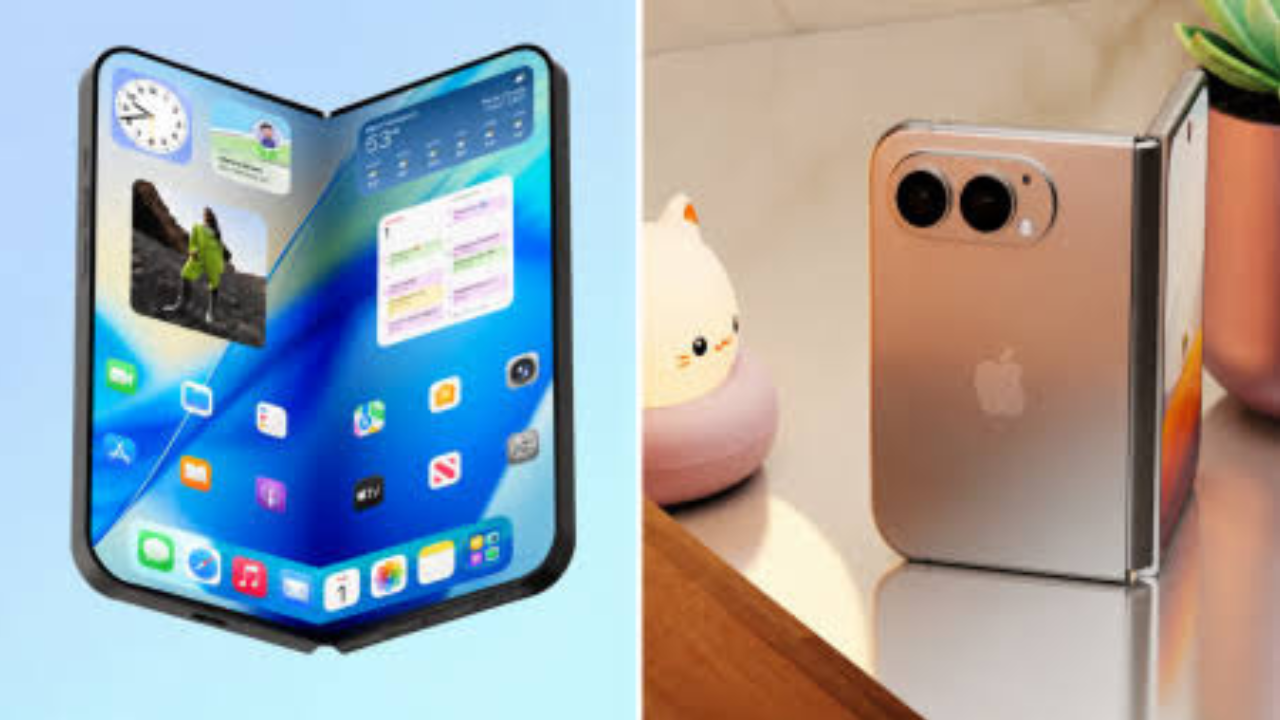
Apple’s first foldable iPhone is just days away from its expected debut, and fresh display details are giving fans a better idea of what the new device may look like. The phone is expected to be shown at Apple’s September 9 event, where the company is also expected to introduce the iPhone 18 Pro and iPhone 18 Pro Max.
The foldable iPhone is widely being called the iPhone Fold or iPhone Ultra in reports, but Apple has not confirmed the final name. Most of the display information available right now comes from leaks and reports, so the final specifications could still be different.
A large screen that folds into a smaller phone
The biggest change is the display design. Reports point to a book-style foldable phone with a smaller screen on the outside and a much larger flexible screen inside.
The outer display is expected to measure about 5.5 inches. When the phone is opened, the main screen could measure around 7.8 inches. That would give the device a much larger working area than a normal iPhone while still allowing it to be carried in a folded form.
The inner screen is also expected to use a roughly 4:3 shape. This would make the unfolded phone closer to a small tablet in terms of screen proportions.
Current reports suggest the display specifications could look roughly like this:
| Display | Reported detail |
|---|---|
| Outer screen | About 5.5 inches |
| Inner screen | About 7.8 inches |
| Design | Book-style fold |
| Inner screen shape | Around 4:3 |
| Fold area | Designed to reduce the visible crease |
| Display technology | Flexible OLED is widely expected |
These figures are still reported specifications, not final Apple-confirmed details.

Apple may have reduced the fold crease
One of the biggest problems with foldable phones is the line that can appear where the display bends. Apple is reportedly working on a hinge and display design that makes this crease much less noticeable.
Earlier reports suggested that Apple might make the crease almost invisible. More recent information is more cautious. The latest reports indicate that Apple may reduce the crease significantly, but it may not completely disappear.
That could still be a major improvement for people who do not like the visible folding line found on some current foldable phones.
The hinge is therefore just as important as the display itself. A good hinge needs to protect the flexible screen while allowing the phone to open and close smoothly.
The inner display could feel more like a small tablet
The reported 7.8-inch inner display is one of the most interesting parts of the device. Because of its wider shape, the unfolded screen could be useful for tasks that feel cramped on a regular smartphone.
Apple is also expected to make changes to iOS so that the software can take better advantage of the larger screen. Reports have pointed to improved multitasking and layouts designed for the foldable format.
That could allow users to make better use of the extra display space instead of simply seeing a stretched version of the normal iPhone interface.
The difference could be especially noticeable when reading documents, browsing websites, viewing photos, or working with multiple apps.
The foldable iPhone is expected to be very thin
Another major part of the leak is the phone’s thickness. Reports suggest the device could be around 4.5mm thick when fully opened. When folded, it could measure roughly 9mm to 9.5mm.
If those figures are accurate, the phone would be extremely thin when unfolded.
Keeping a foldable phone this thin is difficult because the device needs space for two halves, a flexible display, a hinge, batteries and other components. Apple is therefore expected to place a lot of attention on the internal design.
The final thickness will only be confirmed when Apple officially reveals the phone.
Touch ID may replace Face ID
The foldable iPhone is also expected to be different from regular recent iPhone models in another important way.
Current reports suggest Apple could use Touch ID built into the side power button instead of Face ID. The reason is believed to be the difficulty of fitting the usual Face ID hardware into the thin foldable design.

If this happens, it would be a major change for an iPhone. Users could unlock the device with a fingerprint rather than facial recognition.
Apple has not confirmed this feature, so it should still be treated as a report rather than a final specification.
MagSafe support is also expected
The foldable design does not appear to mean Apple will completely change its charging system. Recent reports indicate that the device could support MagSafe charging.
MagSafe would make the foldable iPhone easier to use with compatible magnetic chargers and accessories.
This is another area where Apple could try to keep the foldable phone connected to the existing iPhone accessory system rather than creating a completely separate setup.
What the display could mean for everyday use
The most important question is not simply how large the screen is. It is how Apple uses that extra space.
A larger unfolded display could make several everyday activities easier:

- Reading and browsing could benefit from the wider screen.
- Multitasking could become more useful with more space for two apps.
- Photos and videos could be viewed on a much larger display.
- The phone could provide a more tablet-like experience without requiring a separate tablet.
The software will determine how useful these advantages actually are. A large screen alone does not automatically make a foldable phone better.
Apple Event is only days away
Apple has officially scheduled its next major iPhone event for September 9, 2026. The company is expected to reveal the iPhone 18 Pro and iPhone 18 Pro Max, along with its first foldable iPhone.
The foldable model is expected to be positioned as a premium device, and reports have suggested a price of more than $2,000. However, Apple has not confirmed a price.
There is also some uncertainty about availability. Reports suggest Apple could announce the phone in September but release it later because producing a complex foldable device in large numbers may be difficult.
What remains unconfirmed
Despite the large number of leaks, several important details are still unknown until Apple takes the stage.
| Detail | Current status |
|---|---|
| Official name | Not confirmed |
| 5.5-inch outer display | Reported |
| 7.8-inch inner display | Reported |
| Reduced display crease | Reported |
| 4.5mm unfolded thickness | Reported |
| Touch ID | Reported |
| MagSafe | Reported |
| Final price | Not confirmed |
| Exact release date | Not confirmed |
This is why the leaked specifications should not be treated as Apple’s official product sheet. Apple can change hardware or features before launch, and some reports may simply be wrong.
The biggest iPhone design change in years
If the current reports are accurate, Apple’s first foldable iPhone will be much more than a regular iPhone with a folding screen. The combination of a roughly 5.5-inch outer display, a roughly 7.8-inch inner display, a thinner body and a hinge designed to reduce the crease could give Apple a strong entry into the foldable market.

The real test, however, will come when Apple shows the device and explains how its software works on the larger screen. Buyers will also want to know its final price, battery life, camera setup and availability.
With Apple’s September 9 event now close, the wait is nearly over. The company will soon have a chance to confirm which of these display leaks are accurate and show whether its first foldable iPhone can offer something meaningfully different from the foldable phones already on the market.