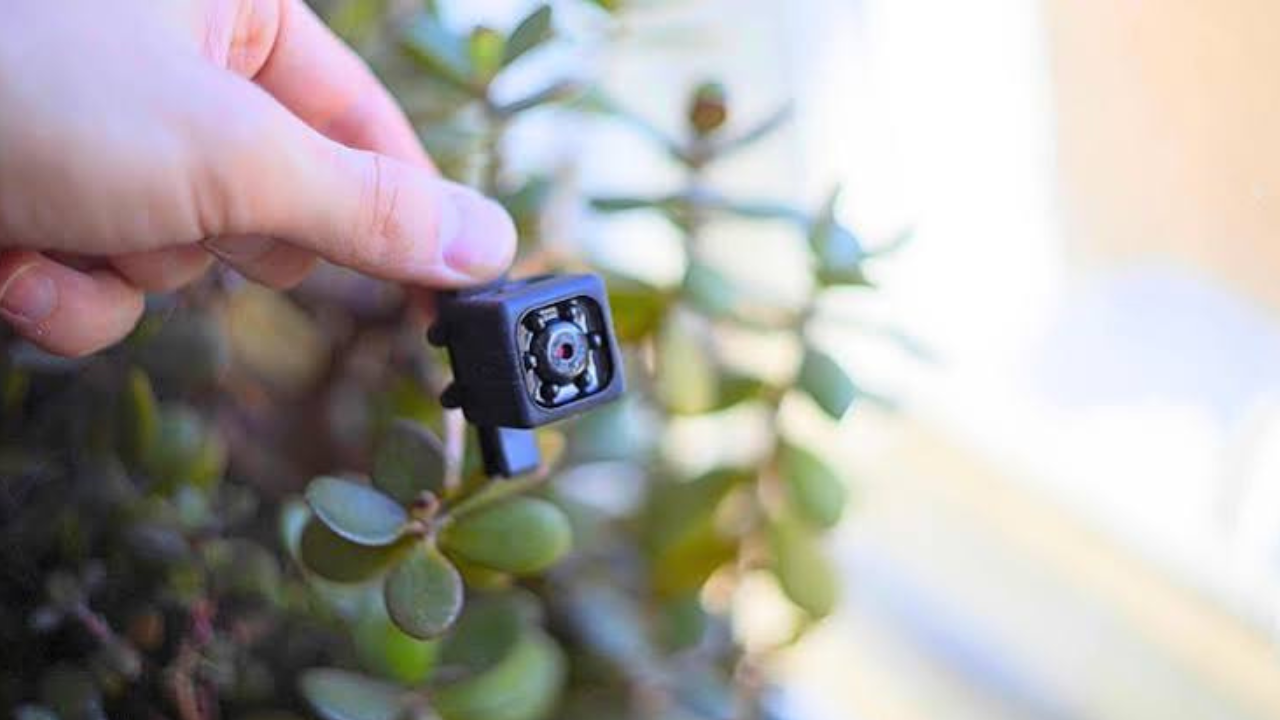
Finding a hidden camera can be difficult because modern camera lenses can be extremely small and may be placed inside ordinary objects. A new research project could make that job much easier by turning a regular smartphone into a camera detector with a small clip-on accessory.
Researchers have developed a prototype called SweepLED that attaches to the back of a smartphone. It uses a group of LEDs, the phone’s camera and artificial intelligence to look for the special reflections produced by camera lenses.
The device is estimated to cost about $7 to make, although it is important to note that SweepLED is currently a research prototype and is not a $7 consumer product available for purchase.
How the $7 smartphone accessory works
SweepLED takes a different approach from many basic hidden-camera detection methods. Instead of asking a person to search a room and look for a tiny reflection, the system uses changing LED lighting and software to help identify the reflection of a camera lens.
The accessory has 15 LEDs arranged around the smartphone camera. These lights shine toward objects while the phone’s camera records what happens to the reflected light.
A camera lens reflects light in a different way from many ordinary surfaces such as plastic, metal or glass. SweepLED’s software looks at these reflection patterns and uses an AI model to decide whether an object may contain a camera lens.
This means the user does not need to understand how camera lenses look or manually inspect every reflection.
Researchers tested it on everyday objects
The researchers tested SweepLED using 30 different objects that could realistically be found in places such as hotel rooms and other private spaces. The test included ordinary objects that could potentially hide a small camera.

The system achieved about 93.9% accuracy in the reported real-world testing and could identify a suspected hidden camera in roughly five seconds per object.
The main idea is simple: instead of relying entirely on a person’s eyes, the accessory uses controlled lighting and software to look for the optical pattern associated with a camera lens.
That could make searching faster, especially when a room contains many objects.
What makes SweepLED different
Traditional hidden-camera checks can involve several methods, and each has weaknesses. A person might visually inspect suspicious objects, use a phone camera to look for infrared light, check a Wi-Fi network or use a dedicated detector.
SweepLED focuses specifically on the optical reflection from a camera lens.
Some of its reported advantages include:
- A small accessory can be attached directly to a smartphone.
- Its LED array provides controlled lighting from different positions.
- AI software analyzes the reflections instead of relying only on the user’s eyes.
- The estimated manufacturing cost is around $7.
The low estimated cost is one of the most interesting parts of the research. If the technology can eventually be produced as a consumer product, it could offer a cheaper alternative to some dedicated detection equipment.
It is not a perfect hidden-camera detector
Despite the impressive test results, SweepLED should not be considered a device that can find every hidden camera.

The researchers identified situations where the system has limitations. For example, it is designed to detect camera lenses through their optical reflections. A camera that does not produce the expected reflection, or one placed in a difficult position, may not be detected.
The system also does not solve every type of surveillance problem. It is not a universal detector for wireless signals, microphones, tracking devices or every electronic device that could be used for surveillance.
This distinction is important because a hidden-camera detector based on optical reflections works differently from an RF detector, which looks for radio signals.
Why the technology could be useful for travelers
Hidden cameras are a privacy concern for people staying in unfamiliar places. Hotel rooms, rental properties and other private spaces can contain many objects that a person would not normally think to inspect.
A small smartphone accessory could make a privacy check easier because most people already carry a phone.
Instead of carrying a large piece of equipment, a traveler could potentially attach a small device to a smartphone and scan suspicious objects.
However, SweepLED is still a research prototype. People should not assume they can currently buy the exact $7 accessory described in the research.
How it compares with phone-based detection methods
Smartphones can already help with some types of hidden-camera checks. For example, some phone cameras can detect infrared light that is invisible to the human eye. This can sometimes reveal cameras that use infrared LEDs for night vision.

But infrared detection has an obvious limitation: not every hidden camera will be using infrared light at the time it is checked.
Wi-Fi scanning has a different limitation. A camera connected to the same network may appear as a device, but a camera can also record locally, use another network or remain disconnected from Wi-Fi.
SweepLED takes another route by looking directly for the optical characteristics of a camera lens.
| Detection method | What it looks for | Main limitation |
|---|---|---|
| Visual inspection | Visible camera lenses or unusual objects | Can be slow and easy to miss tiny lenses |
| Phone infrared check | Infrared light from some cameras | Does not find every camera |
| Wi-Fi check | Devices connected to a network | Does not identify every camera |
| RF detector | Radio signals | Can produce unrelated signals and false alerts |
| SweepLED prototype | Reflections from camera lenses | Still a research prototype with detection limits |
No single method should be treated as a guarantee that a room contains no hidden camera.
The $7 figure needs some context
The headline price of $7 may sound like a finished product price, but that is not what the research means.
The figure refers to the estimated manufacturing cost of the prototype’s hardware. A commercial product could cost more because a company would also have to account for software development, manufacturing, packaging, distribution, testing, support and other costs.
There is also no confirmed retail price because SweepLED has not been launched as a normal consumer accessory.
So, for now, the most accurate way to describe it is as a low-cost research prototype with an estimated hardware cost of around $7.

AI is doing much of the important work
The LEDs are only one part of the system. The software is what helps turn the reflections into useful information.
The accessory creates changing lighting conditions around the object. The smartphone camera captures the resulting reflections, and the AI system analyzes those images to determine whether they match the pattern expected from a camera lens.
This approach is useful because many normal objects are reflective. A piece of metal, glass or polished plastic can produce bright spots that might look suspicious to a person.
The software is designed to distinguish those ordinary reflections from the more specific optical response of a camera lens.
What this could mean for privacy
The most promising part of SweepLED is not simply its small size or low estimated cost. It is the possibility of making camera detection easier for ordinary people.
Dedicated privacy equipment can be expensive or difficult for an average traveler to understand. A smartphone-based system could potentially make the process more familiar and portable.
But users should still use common sense. A clean result from any detector does not prove that a room is completely free of surveillance equipment.
If someone finds an object that appears to contain a hidden camera, they should avoid damaging it or tampering with it. Depending on the situation, documenting what was found and contacting the property owner, accommodation provider or appropriate authorities may be a safer response.

A promising idea that is not yet a $7 product
SweepLED shows how a smartphone could become more useful for personal privacy. Its combination of a small LED array, smartphone camera and AI software produced promising results in testing, while the estimated hardware cost remained low.
But the technology is still at the research stage. The reported accuracy does not mean it can detect every hidden camera, and the $7 figure should not be confused with a confirmed retail price.
If the technology eventually reaches consumers, its biggest advantage could be simplicity. Instead of carrying a specialized detector, people could potentially use a small smartphone accessory to check suspicious objects in unfamiliar spaces.
For now, the research offers an interesting look at where privacy technology is heading: smaller hardware, smarter software and tools that can use devices people already carry every day.