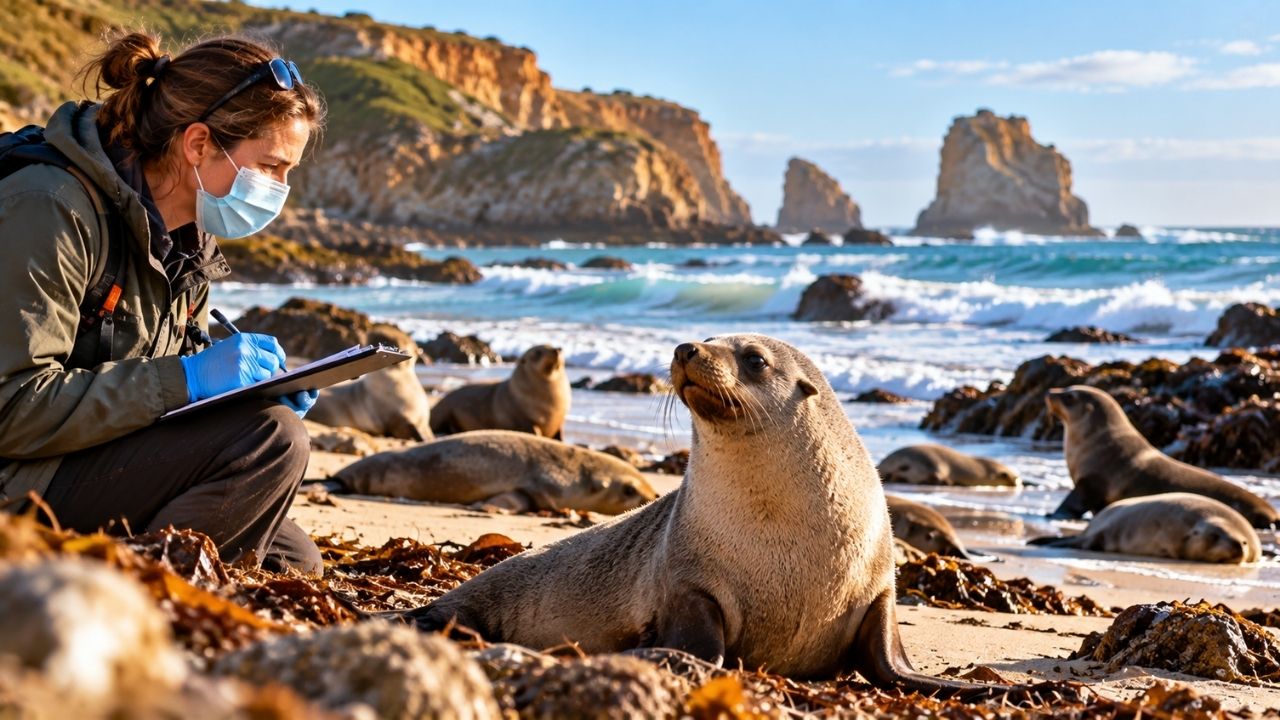
Wildlife health teams in Victoria are tracking a worrying turn in the spread of avian influenza after the virus jumped from wild birds to marine mammals. Government testing has confirmed new cases of H5 bird flu in fur seals along the state’s coastline. This marks a major change in how the disease behaves locally, raising deep concerns for the safety of native marine life and coastal ecosystems.
New coastal infections found in seals
The recent positive cases were found through the state’s ongoing nature monitoring programs and reports from local beach visitors. Specialized veterinarians were sent out to look at the sick animals after people spotted them on different beaches.
A clean breakdown of the specific locations and species involved in these latest animal infections shows where the virus is spreading:
| Location of Detections | Marine Mammal Species Impacted | Case Condition Status |
|---|---|---|
| Gabo Island (Eastern Coast) | Long-nosed fur seal | Deceased wild animal found |
| Rye Back Beach (Mornington Peninsula) | Australian fur seal | Identified via community report |
These cases follow a rising number of bird flu signs across Victoria, including previous bird deaths near Portland and the south-west coast.
Why the spread to seals has experts worried
Wildlife scientists are paying close attention because the H5 virus can cause severe health damage when it moves into mammals. Seals are incredibly social animals that naturally live packed tight together in large colonies on rocks and beaches. They constantly touch, rub against each other, and sniff faces to recognize their family members and pups.
This close, friendly behavior makes it very easy for a breathing sickness to jump quickly from one seal to another. Experts worry that if the virus spreads wildly inside these packed colonies, it could cause large numbers of deaths, just like it did to elephant seals and sea lions in other parts of the world.
Rules for beach visitors to stay safe
Even though the risk of humans catching this specific bird flu stays very low, the public must take strict safety steps to protect themselves and stop the disease from spreading. The government has put clear rules in place for anyone visiting Victorian beaches.
- Stay at least 30 meters away from any seal or marine mammal that looks sick or hurt.
- Keep young children and family pets far away from wild animals on the sand.
- Do not touch, move, or handle any dead birds or marine mammals you find.
- Avoid walking directly into groups of resting seals on rocky shores or beaches.
For the most up-to-date maps of confirmed animal cases or to find out about local wildlife safety zones, you can visit the official Agriculture Victoria portal.
Reporting sick animals to help the response
Health authorities cannot stop the virus among wild animal populations, but quick updates from the public help them track where the disease is moving. People are asked to keep a watchful eye out when visiting coastal areas.
If you see a dead or sick wild seabird, waterbird, or marine mammal like a seal or dolphin, you should report it immediately. Write down the exact beach location, the kind of animal, and how many are affected before calling the Emergency Animal Disease Hotline on 1800 675 888.