
 Join WhatsApp
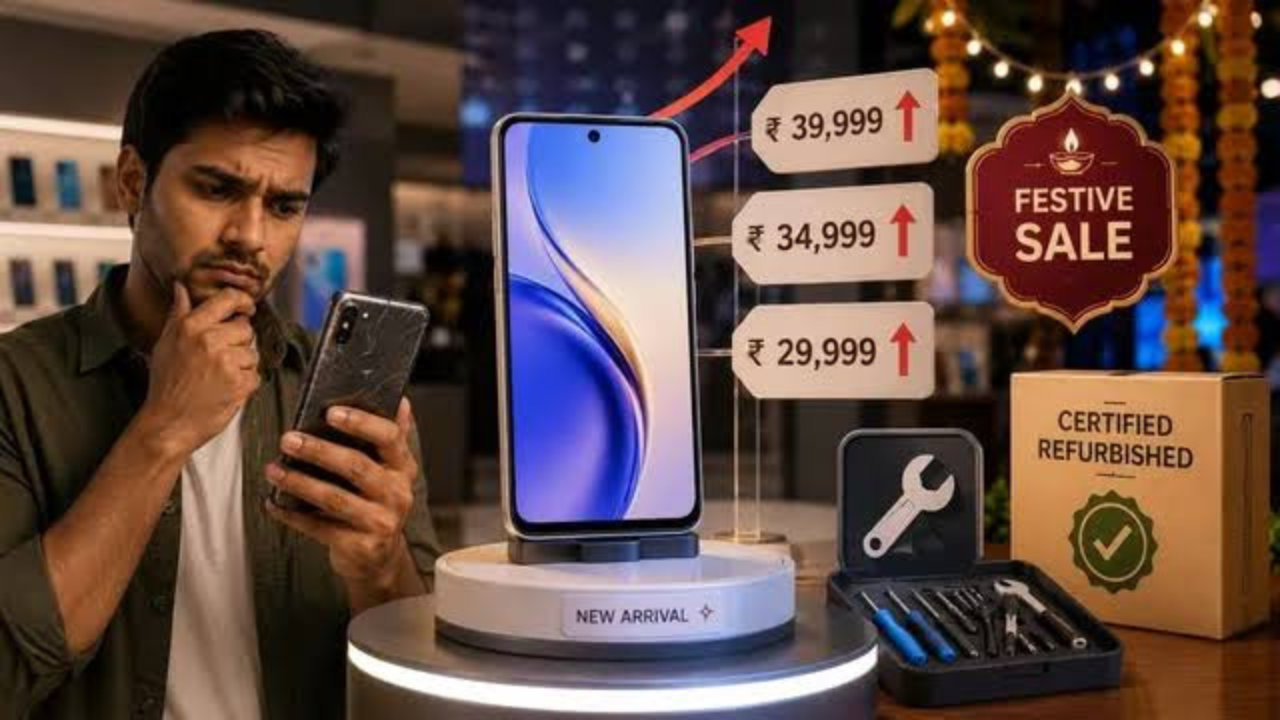
The smartphone market is going through a major change in 2026. New phone shipments are falling as memory costs rise and device prices become harder for many buyers to afford. At the same time, refurbished smartphones are becoming a more attractive choice for people who want a good phone without paying the full price.
The shift is especially clear in India, where buyers are showing more interest in older premium phones and certified refurbished devices.
New smartphone sales are under pressure
The global smartphone market has faced a sharp slowdown in 2026. Counterpoint Research estimates that global smartphone shipments will fall 14.3% from the previous year. The main problems are higher component costs, limited memory supply and weaker affordability, especially for lower-priced phones.
The pressure is already visible in quarterly results. Global smartphone shipments fell 11% year over year in the second quarter of 2026, reaching the lowest second-quarter level since 2013, according to Counterpoint Research.
This does not mean people have stopped buying smartphones. Instead, many buyers are taking longer to replace their current phones, looking for discounts or choosing a cheaper used or refurbished model.
Prices are also playing an important role. Memory chips used in smartphones have become more expensive, and manufacturers have passed part of those higher costs on to buyers. Lower-cost and mid-range phones are facing some of the strongest pressure because there is less room to absorb higher production costs.
Why refurbished phones are becoming more attractive
A refurbished smartphone is a previously owned phone that has been checked, tested and prepared for another buyer. The exact testing, repairs, warranty and replacement parts can differ depending on the seller or program.

For many buyers, the biggest advantage is simple: they can often get a higher-end phone for less money than a comparable new model.
A buyer who cannot afford a new premium phone may instead consider a recent flagship that has already been used and refurbished. This is helping premium models remain popular in the secondary market.
In India, Counterpoint Research reported that refurbished smartphone sales grew 4.9% year over year in the first half of 2025. Demand was increasingly moving toward newer premium models, including recent iPhone and Samsung Galaxy S series phones.
The broader Indian pre-owned smartphone market also grew about 5% in the first half of 2025, with Apple showing particularly strong growth.
India is seeing a stronger shift toward refurbished phones
India is one of the markets where the change is becoming especially important. Rising prices are making buyers think more carefully about how much they want to spend on their next phone.
Recent Counterpoint research shows that Indian consumers are changing their buying plans as smartphone prices rise. In a 2026 consumer survey, 29% of people planning to buy a smartphone said they would either stay within their planned budget or choose a refurbished phone if prices increased. Another 25% said they would delay the purchase.
India’s refurbished market is also expected to grow faster than the new-phone market in 2026. Counterpoint’s forecast puts refurbished smartphone growth at around 12% for the year, while new smartphone shipments are expected to declin.
The growing interest is not limited to basic or older phones. Buyers are increasingly looking at premium refurbished models because they can offer features and performance that would otherwise cost much more when purchased new.
What buyers are looking for in a refurbished phone
The refurbished market is changing as buyers become more careful about quality. A low price alone is no longer enough for many customers.
People want to know whether the phone works properly, whether the battery is in good condition and whether the device can still receive software updates. They also want greater confidence that the phone is genuine and not stolen or locked to another user.
The most important things buyers should check include:
- The phone’s model, storage size and network compatibility
- Battery condition and the working condition of the screen, cameras, speakers and charging port
- Whether the device has been properly reset and is free from another user’s account
- The seller’s return policy, warranty and details about testing or repairs
These checks matter because not every used phone is refurbished to the same standard. Some devices may have original parts, while others may have replacement screens, batteries or other components.
A trusted refurbishment program can reduce some of these concerns, but buyers should still read the product details carefully before paying.
Premium phones are driving much of the demand
One of the most interesting changes is the growing demand for premium refurbished smartphones. Instead of simply looking for the cheapest possible device, some buyers are using the refurbished market to reach a higher phone category within their budget.
In India, recent research found growing demand for recent-generation iPhones and Samsung Galaxy S models. Demand for Pro versions of iPhones has also been increasing in the refurbished market.
This makes sense when prices for new premium phones rise. A buyer may prefer a slightly older high-end phone rather than a new lower-end model if both fit within a similar budget.
The same trend can be seen globally. Refurbished smartphone sales grew 5% in 2024, while new smartphone sales grew 3%. Apple remained the leading brand in the global refurbished market, accounting for 56% of refurbished smartphone sales that year.
Refurbished does not mean the market has no problems
The refurbished market is growing, but it also faces a basic challenge: supply.
People need to trade in or sell their old phones before those devices can enter the refurbishment system. As consumers keep their smartphones for longer, fewer recent devices may become available for refurbishment. Counterpoint has pointed to longer replacement cycles as one reason the supply of second-hand devices can remain tight.
There is also a trust issue. Buyers may worry about poor repairs, counterfeit parts, stolen devices, locked phones or weak batteries. This is why warranties, testing and clear device information are becoming more important as the market grows.
The supply problem can also affect prices. If there are not enough good-quality recent phones available, popular models may not become as cheap as buyers expect.

New phones are still important, but the buying pattern is changing
The rise of refurbished phones does not mean new smartphones are disappearing. Premium new models continue to attract buyers, and some brands have performed better than the overall market.
For example, global smartphone revenue increased 7% in the second quarter of 2026 even though shipments fell. Higher prices and a larger share of premium phones helped push revenue higher.
This shows that the market is not simply moving from expensive phones to cheap phones. Instead, buyers are becoming more selective. Some are willing to pay for a new premium phone, while others are choosing a refurbished premium phone to get similar features at a lower upfront cost.
The difference is especially important for budget-conscious customers. When new phone prices rise, a refurbished device can give them another way to get better hardware without moving into a much higher spending range.
What this means for smartphone buyers
For consumers, the growing refurbished market gives them more choices. A buyer no longer has to look only at the latest new models when deciding which phone to purchase.
A refurbished phone can make sense when the model is still receiving software updates, the device has been properly tested and the seller provides reasonable protection through a warranty or return policy.
At the same time, buyers should not assume that every refurbished phone is automatically a good deal. The condition of the individual device matters more than the label.

The best value usually comes from comparing the total price, phone condition, battery health, warranty and expected software support with the price of a new alternative.
The refurbished market could become an even bigger part of the smartphone industry
The current smartphone slowdown is giving the refurbished market a fresh opportunity. Higher new-phone prices are pushing some buyers toward used and refurbished devices, while growing demand for premium phones is helping older flagship models retain their value.
India is already showing this change clearly. Refurbished smartphone demand is growing even as the new-phone market faces pressure from higher prices and weaker shipment volumes.
For buyers, the message is simple: a smartphone does not have to be brand new to offer strong value. As long as the device has been properly checked, is in good working condition and comes from a trustworthy seller, a refurbished phone can be a practical alternative to buying new.
The bigger change is that refurbished smartphones are moving from being seen mainly as a second-choice option to becoming a normal part of the smartphone buying decision. With new phone prices under pressure, that shift is likely to remain important as the market moves through 2026.