Huawei and Xiaomi have launched new premium foldable phones in China just days before Apple’s major September event. The timing puts two very different foldable designs in the spotlight as Apple prepares to enter a smartphone category that Chinese brands have been developing for years.
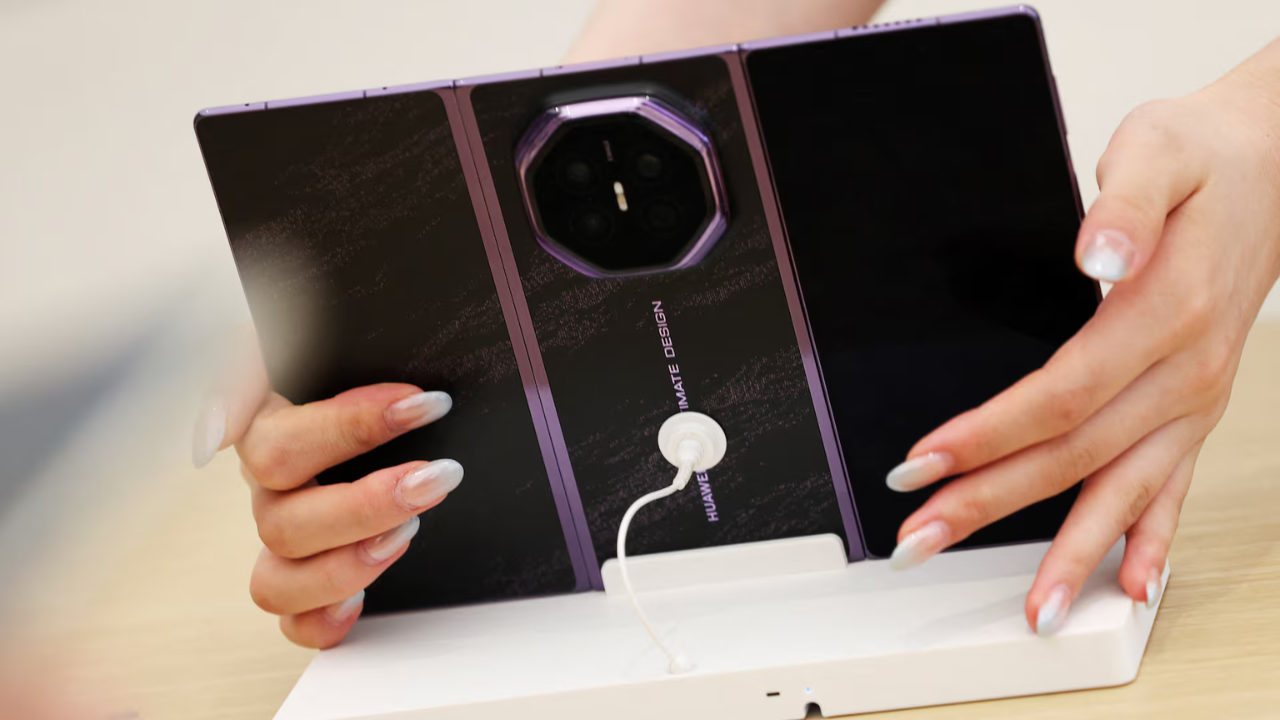
Huawei has introduced the Mate XT2, a new tri-fold phone that opens into a tablet-sized device. Xiaomi has launched the Xiaomi 18 Fold, a more traditional book-style foldable with a wide inner screen, a Leica camera system and Xiaomi’s own XRing O3 processor. Both phones are aimed at the high-end market.
Huawei Mate XT2 takes the tri-fold route
Huawei’s Mate XT2 is the more unusual of the two new phones. Instead of folding once like most book-style foldables, it folds twice. When fully opened, the device provides a large tablet-like display.
The new model is the third generation of Huawei’s tri-fold design. The company has made changes to the hinge and improved water resistance compared with earlier models. Huawei has also added a privacy display option that limits what people standing beside the user can see on the screen.
The Mate XT2 uses Huawei’s Kirin 9050 Pro chip. Huawei is also highlighting its LogicFolding approach, which is designed to improve performance and power use while relying more heavily on technology developed within China.
The phone is positioned as an expensive flagship rather than a mainstream device. Huawei has set Chinese prices between 19,999 yuan and 24,999 yuan, with sales scheduled to begin on September 12.
Xiaomi 18 Fold uses a different idea
Xiaomi has taken a different approach with the Xiaomi 18 Fold. Rather than using three folding sections, the phone has a book-style design with one main folding screen.
The device has a 7.58-inch inner display and a 5.38-inch outer screen. This gives users a large display when the phone is opened while keeping a more conventional phone screen available when it is closed.
The Xiaomi 18 Fold is also relatively light for a large foldable, weighing around 219 grams. Xiaomi has focused on keeping the body thin while still including a large battery and high-end internal hardware.
Its key specifications include:
- 7.58-inch foldable inner display and 5.38-inch outer display
- Xiaomi XRing O3 processor with AI-focused processing
- 200MP Leica main camera with a 50MP ultra-wide and 50MP periscope telephoto camera
- 6,000mAh battery with 67W wired and 50W wireless charging
The phone starts at 10,999 yuan in China, with higher prices for models offering more memory and storage.
Xiaomi is betting on its own chip
One of the most important parts of the Xiaomi 18 Fold is the XRing O3 processor.
Xiaomi has been working to develop more of its own smartphone technology, and the XRing O3 is an important part of that effort. The chip is designed for flagship performance and AI tasks and is paired with memory hardware from Chinese supplier CXMT in the new foldable.
This gives Xiaomi another way to differentiate its premium phones at a time when chip supply and access to advanced technology remain major issues for Chinese smartphone makers.

The use of a homegrown processor is also significant because Huawei has been following a similar path with its Kirin chips. Both companies are therefore showing that their flagship phones can be built around more locally developed technology.
Cameras are a major selling point
Both companies are using cameras as a key reason to consider their new foldables.
The Xiaomi 18 Fold has a 200MP Leica main camera, supported by a 50MP ultra-wide camera and a 50MP periscope telephoto camera. The dedicated zoom camera gives it more flexibility for distant subjects and portrait photography.
Huawei’s Mate XT2 also comes with a triple rear-camera system, although Huawei’s main focus with this phone is its tri-fold design, large screen and new hardware.
The camera race is important because foldable phones were once mainly about the display. Premium models are now expected to offer camera hardware that can compete with traditional flagship smartphones.
Huawei adds a privacy display
One of the Mate XT2’s most unusual features is its optional privacy display.
The technology narrows the viewing angle of the screen. Someone looking directly at the phone can see the content, while people viewing it from the side see a much darker image.

Huawei has made this feature an option on the highest-end version rather than including it across every Mate XT2 model. The top configuration includes 16GB of RAM and 1TB of storage, with the privacy display costing an additional 1,000 yuan.
This feature could be useful for people who regularly use their phones in public places such as trains, airports, offices, or cafes.
The launches come at an important time for Apple
The timing of the two Chinese launches is hard to ignore.
Huawei and Xiaomi unveiled their new foldables on September 7, while Apple’s major product event is scheduled for September 9. Apple is widely expected to introduce its first foldable iPhone at the event.
Apple’s entry could bring much more attention to foldable phones. Unlike Huawei and Xiaomi, Apple has not previously sold a foldable iPhone, so the company’s first device will be entering a market where other manufacturers already have several generations of experience.
Reports suggest Apple’s foldable phone will target the premium market and could cost more than $2,000. However, Apple’s final specifications, price and availability should be judged from its official announcement rather than early reports.
Three different approaches to the same market
The current foldable race shows that there is no single design that manufacturers have settled on.

Huawei is pushing the tri-fold concept. Its Mate XT2 can move from a conventional phone format to a much larger tablet-style screen.
Xiaomi is using a wide book-style design. Its 18 Fold focuses on a large inner screen while keeping the device relatively light and adding flagship camera and processor hardware.
Apple, if it launches the expected foldable iPhone, is likely to use its own approach to the design. The company will have to convince buyers that its hardware, software and ecosystem offer enough value to justify a premium price.
| Phone | Foldable design | Main highlight | China starting price |
|---|---|---|---|
| Huawei Mate XT2 | Tri-fold | Large tablet-style display and Kirin 9050 Pro | 19,999 yuan |
| Xiaomi 18 Fold | Book-style | 200MP Leica camera and XRing O3 | 10,999 yuan |
| Expected Apple foldable iPhone | Expected book-style design | Apple’s first foldable iPhone | Not officially confirmed at the time of these launches |
Why these launches matter
The new Huawei and Xiaomi phones show that foldable technology is moving beyond simple experiments. Manufacturers are now competing over camera quality, processor performance, battery size, screen technology, durability, privacy and overall phone thickness.
Huawei’s Mate XT2 is particularly notable because tri-fold phones remain a very small part of the wider smartphone market. Xiaomi’s approach is more familiar, but its combination of a large screen, high-resolution camera and custom processor makes it a serious premium device.
The arrival of Apple’s first foldable could change the market even further. Apple has a huge customer base and strong influence over premium smartphone buyers. If its foldable gains attention, demand for competing devices could also increase.
At the same time, Huawei and Xiaomi have already shown that Apple will not be entering an empty market. Chinese manufacturers have been selling foldable phones for years and are continuing to experiment with designs that are different from the standard phone.

Final thoughts
Huawei and Xiaomi have chosen an important moment to introduce their newest foldables. The Mate XT2 pushes the tri-fold design further with a redesigned hinge, improved water resistance, a privacy display option and the Kirin 9050 Pro chip.
The Xiaomi 18 Fold takes a more traditional route but packs it with premium hardware, including a 200MP Leica camera system, XRing O3 processor, large displays and a 6,000mAh battery.
Both phones were launched in China ahead of Apple’s September 9 event, where the company is expected to reveal its first foldable iPhone.
For consumers, the timing could be good news. As Apple enters the foldable market, Huawei, Xiaomi and other established players will have even more reason to improve their designs, cameras, software and prices. The next stage of the foldable phone race is no longer just about whether a phone can fold. It is about which design offers the best overall experience.