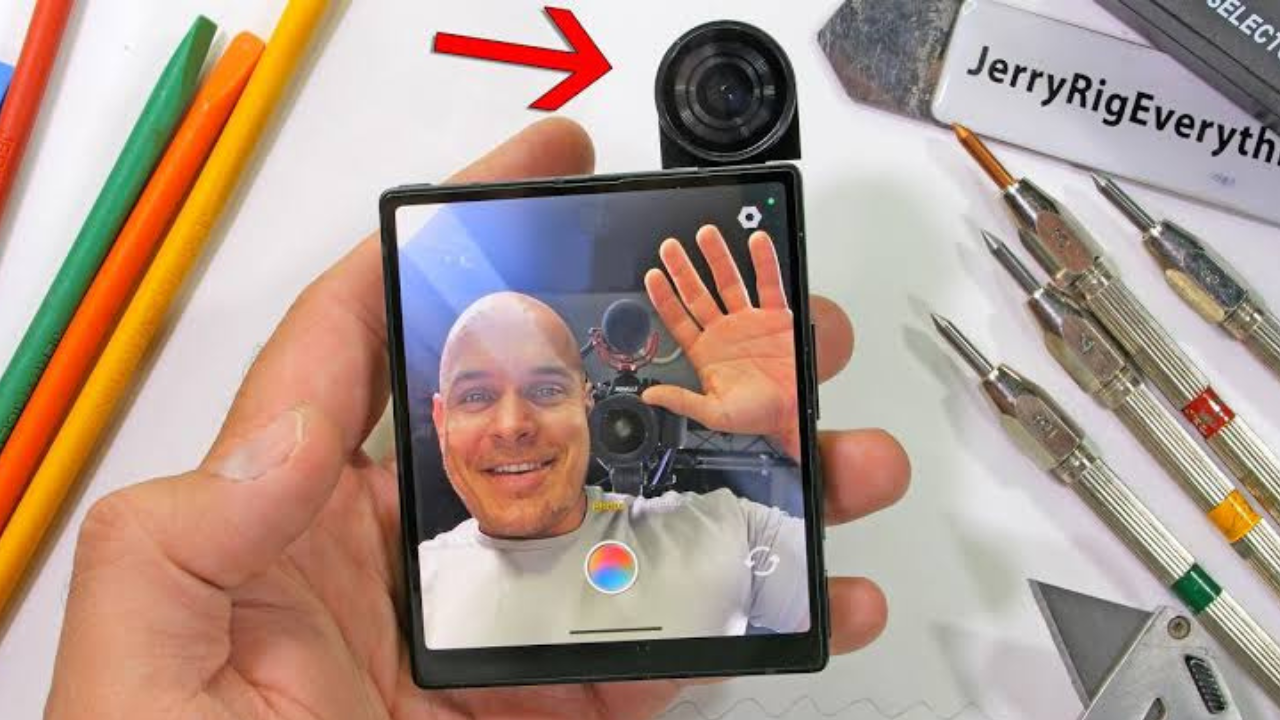
The MindOne Pro is one of the most unusual smartphones of 2026. Instead of following the trend toward bigger screens and multiple rear cameras, it uses a small 4-inch display, a single rotating camera and built-in cellular connectivity.
A closer look at the phone shows that its most interesting features are closely connected to its compact design. The sapphire glass protects the small display, the rotating camera works as both the front and rear camera, and the built-in internet system gives users another way to get online without inserting a SIM card.
A small phone built around a different idea
The MindOne Pro measures 86 by 72 by 8.9mm and weighs about 136 grams. Its 4.02-inch AMOLED display has a 1240 x 1080 resolution and a 90Hz refresh rate. The square shape gives it a very different look from the tall screens used by almost every major smartphone today.
The phone uses a MediaTek MT8781 processor with 8GB of RAM and 256GB of storage. It runs Android alongside iKKO’s own AI-focused software.
The small body is not simply a smaller version of a normal phone. Several hardware choices appear to have been made specifically to make the compact design practical. The single camera, for example, does two jobs, while the built-in vSIM system reduces the need to rely only on a physical SIM card.
Why the sapphire glass stands out
The MindOne Pro’s display is covered by sapphire glass, which is one of the biggest differences between the Pro model and more conventional smartphones.
Sapphire is extremely hard and is widely used where strong resistance to scratches is important. iKKO lists the MindOne Pro’s screen as having a 9H hardness rating and says the glass has thicker, curved edges for added protection.

That does not mean the screen is impossible to break. Scratch resistance and resistance to drops are not the same thing. A hard material can still suffer damage from a strong impact.
The main display details are:
| Feature | MindOne Pro |
|---|---|
| Display | AMOLED |
| Size | 4.02 inches |
| Resolution | 1240 x 1080 |
| Refresh rate | 90Hz |
| Protection | Sapphire glass |
| Claimed hardness | 9H |
| Body thickness | 8.9mm |
| Weight | About 136g |
The sapphire covering is particularly interesting on a phone this small. Because the device is designed to be carried easily in a pocket or small bag, protection against everyday scratches can be more useful than simply adding more screen size.
The rotating 50MP camera is the real hardware highlight
The camera system is arguably the most unusual part of the MindOne Pro.
Instead of putting one camera on the back and another inside the front of the phone, iKKO uses a single 50MP Sony sensor in a rotating module. The mechanism can flip through 180 degrees, allowing the camera to face either direction.
The same camera can therefore be used for regular photographs and selfies. It can also stop at different angles, giving the user more control over the camera’s position.
The camera uses a 1/1.56-inch Sony sensor, an f/1.88 aperture, optical image stabilization and an LED flash. It supports H.265 video recording at up to 30 frames per second according to the current product specifications.

The important camera features are:
- 50MP Sony sensor
- 1/1.56-inch sensor size
- f/1.88 aperture
- Optical image stabilization
- 180-degree rotating mechanism
This approach makes sense for a compact phone. A separate front camera would take up additional space, while the rotating design lets the main sensor handle both jobs.
The moving camera also gives the MindOne Pro one feature that fixed cameras cannot offer. The module can be positioned at an angle instead of being limited to simply pointing forward or backward.
What a closer hardware look tells us about the camera
The rotating camera is more than a visual feature. It changes how the phone is designed internally because the camera needs a physical mechanism that can move while keeping the sensor and lens assembly in the correct position.
Hands-on testing has found that the camera module can hold different positions without obvious wobble. That is important because a loose or unstable mechanism would quickly become frustrating during photography and video calls.
There is also a clear trade-off. A fixed camera has no moving hinge or rotating section. The MindOne Pro adds mechanical parts in exchange for having one high-quality camera perform two roles.
That makes the rotating camera both the phone’s biggest design advantage and one of its most unusual pieces of hardware.

What “Global Internet” actually means
The phrase “Global Internet” needs some explanation because it does not mean unlimited free mobile data everywhere.
The MindOne Pro has three connectivity options. NovaLink provides internet access for the phone’s built-in AI tools in more than 60 regions. The vSIM system provides broader mobile data service through paid top-ups in more than 140 countries. There is also a physical Nano-SIM slot for a normal mobile carrier.
| Connectivity system | What it provides | How it works |
|---|---|---|
| NovaLink | Internet for built-in AI tools | Free in 60+ regions |
| vSIM | Full mobile data | Paid top-ups in 140+ countries |
| Nano-SIM | Calls, texts and mobile data | User inserts their own SIM |
This difference is important.
NovaLink is aimed at functions such as real-time translation, voice notes, summaries, podcasts and the built-in AI assistant. It is not the same thing as receiving an unlimited free mobile data plan for every application.
The vSIM system is designed for broader internet use. According to iKKO’s current specifications, it supports browsing, streaming, messaging, downloads and tethering, with service purchased through top-ups.
The physical Nano-SIM remains useful for people who want to use their own carrier. This gives the phone a fallback option instead of making users depend entirely on its built-in connectivity.
The rest of the hardware keeps things fairly conventional
Behind the unusual exterior, the MindOne Pro uses familiar smartphone hardware.

The phone has 8GB of RAM and 256GB of internal storage. It supports Wi-Fi on both 2.4GHz and 5GHz networks, Bluetooth 5.2, NFC and several satellite navigation systems.
It has a USB Type-C port with USB 2.0 and OTG support. The battery is rated at 2,200mAh, while the phone has an IP54 rating for protection against dust and water splashes.
The small battery is worth noting because the phone itself is much smaller than most modern smartphones. A 2,200mAh battery takes up less space, but the compact design also means there is less room for a larger power cell.
The square display creates another practical difference. Most Android applications are designed around taller rectangular screens. As a result, some apps can look unusual or have layout problems on the MindOne Pro’s near-square display.
Where the unusual design makes sense
The MindOne Pro’s hardware choices are easier to understand when viewed together.
The small screen keeps the body compact. The rotating camera avoids the need for a separate selfie camera. Sapphire glass adds strong scratch resistance without requiring a bulky protective solution. The built-in connectivity systems give users another way to get online when a physical SIM is not convenient.
None of these features makes the phone a direct replacement for every large smartphone, though. The smaller screen can make some apps less comfortable to use, the battery is modest, and the rotating camera introduces moving hardware that a conventional phone does not need.

The phone is therefore aimed at people who value compact size and unusual design more than having the biggest screen or the most cameras.
The teardown takeaway
The MindOne Pro is interesting because its unusual features are not random additions. They work together around one central idea: making a fully capable Android phone much smaller than the typical smartphone.
The sapphire display focuses on durability. The 180-degree camera lets one 50MP sensor handle both photography and selfies. NovaLink provides limited built-in internet access for the phone’s AI features, while the paid vSIM system expands that connectivity to regular mobile data in supported countries.
The result is a smartphone that takes a very different path from the mainstream market. It does not try to win with a huge display, a large camera array or an enormous battery. Instead, it uses clever hardware choices to fit a surprisingly complete smartphone experience into a compact body.
That is ultimately what makes the MindOne Pro worth examining. Its sapphire glass and rotating camera are eye-catching, but the more important story is how the entire phone has been designed around saving space without giving up the basic features people expect from a modern smartphone.