An old Microsoft concept from 2009 is getting fresh attention after Apple entered the foldable phone market. The reason is simple: Microsoft’s Courier showed a book-like device with two touchscreens joined by a hinge, years before foldable phones became a major smartphone category.
It would be a stretch to say Microsoft actually predicted Apple’s iPhone Duo. The Courier was designed as a digital notebook and tablet, not as an iPhone. But watching the old concept today makes the similarities hard to ignore.
Microsoft’s Courier Was Far Ahead of Its Time
The Microsoft Courier was a secret prototype built around two touchscreens connected like the pages of a book. Reports about the project appeared in 2009, and an early concept video showed how Microsoft imagined people using the device.
The prototype was designed mainly for writing, drawing, organizing information and collecting content. It was closer to a digital notebook than a traditional tablet.
The Courier was reported to have two 7-inch displays. Users could touch the screens or use a stylus, and the interface was built around a digital journal where people could write notes, add pictures and collect information.
Microsoft never released the Courier as a consumer product. The company confirmed in 2010 that it had no plans to build the device.
The Old Video Looks Surprisingly Modern Today
The reason the 2009 video is attracting attention again is its basic idea. The Courier opened and closed like a book, giving users two screens when it was open and a compact device when it was closed.

That same general idea is now familiar because foldable phones have brought book-style devices into the mainstream.
The similarities become clearer when looking at the basic concepts:
- A device that opens like a book.
- A large screen area when the device is opened.
- A compact shape when it is closed.
- Software designed around two connected sides of a device.
The important difference is that Courier used two separate displays. Modern foldable phones generally use one flexible display that bends through a hinge.
Courier Was Not Really an iPhone
Despite the similarities, calling Courier an early version of the iPhone Duo would be misleading.
Microsoft designed Courier for a different purpose. Its main idea was a digital journal that could replace paper notebooks and help people create and organize information. It was not designed as a pocket smartphone.
The reported Courier concept included features such as handwriting, drawing, web browsing, email and photo viewing. It also had a camera in the prototype design.
Apple’s foldable iPhone, by contrast, is part of the iPhone product line and is built around the needs of a modern smartphone. Its foldable display gives the user a larger screen while keeping the device usable as a phone when closed.

So the two products share a form-factor idea, but their intended roles are very different.
The Biggest Connection Is the Hinge
The most interesting part of the old Courier concept is its physical design.
The two screens were connected by a hinge, allowing the device to open and close like a notebook. That was an unusual idea when the concept appeared because smartphones and tablets at the time were almost always built around one fixed screen.
Today, the hinge is one of the most important parts of a foldable phone. It allows a large display to fit into a smaller device when closed.
The technology has changed dramatically since 2009. Modern flexible displays, thinner components and improved hinges make it possible to build devices that were difficult or impossible to produce at the time.
This is why the Courier video feels less like a finished product from the past and more like an early look at an idea that took many years to become practical.
Microsoft Returned to the Idea Years Later
Courier was not the end of Microsoft’s interest in two-screen devices.

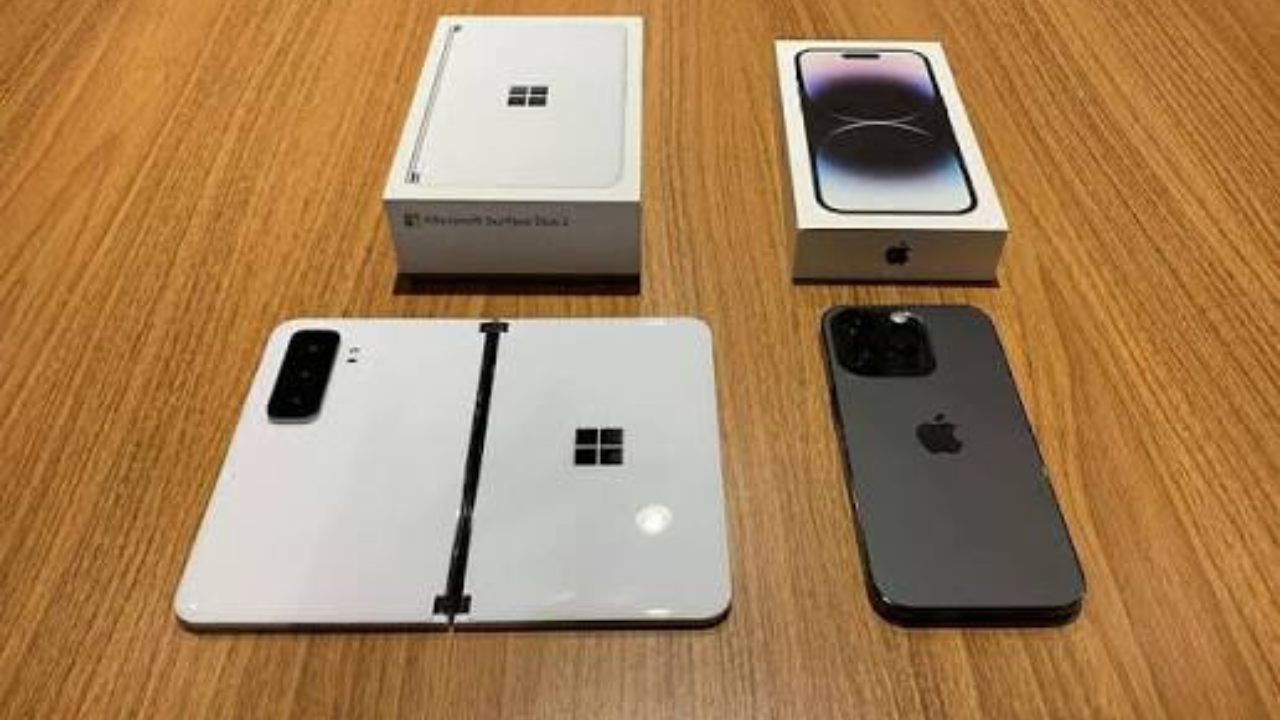
In 2019, Microsoft announced the Surface Neo and Surface Duo. Both used two screens connected by a hinge, although they were much more modern than the original Courier concept.
The Surface Duo was a smartphone-sized device with two 5.6-inch screens. It launched in 2020 and ran Android. Unlike a modern flexible-screen foldable, it had a visible gap between the two displays.
The Surface Neo was a larger dual-screen computer designed for productivity. It was announced but never released as a finished commercial product.
This history makes the Courier story even more interesting. Microsoft had the basic idea more than a decade before it eventually released the Surface Duo, but the company’s early concept never became a mainstream product.
How Courier Compares With a Modern Foldable iPhone
The similarities are easier to understand when the two ideas are placed side by side.
| Feature | Microsoft Courier | Modern foldable iPhone concept |
|---|---|---|
| First shown | Around 2009 | Arrived much later |
| Basic shape | Book-like | Book-like |
| Display design | Two separate touchscreens | Flexible foldable display |
| Main purpose | Digital notebook and creative work | Smartphone with a larger folding display |
| Input | Touch and stylus | Touch |
| Phone function | Not designed as a normal smartphone | Designed as an iPhone |
| Commercial release | Cancelled | Commercial foldable iPhone |
This comparison shows why the old video is interesting without proving that Microsoft predicted Apple’s product.
Apple Did Not Need the Courier to Invent the Idea
Book-like electronic devices were not unique to Microsoft. Researchers and companies had explored dual-screen computers, electronic notebooks and folding designs for years.

What Microsoft did with Courier was create a particularly polished vision of how such a device could work. The concept showed that two screens could be treated as parts of one workspace rather than simply two independent displays.
That idea has appeared again in many forms since then, including Microsoft’s own Surface devices and today’s foldable smartphones.
Apple’s move into foldables is therefore better understood as another step in a much longer development of mobile computing rather than a direct copy of a 2009 Microsoft prototype.
Why the Courier Video Matters Again Now
The video is interesting because it shows how technology ideas can arrive long before the hardware needed to make them practical.
In 2009, a device with two large touchscreens, a hinge and sophisticated software looked like a futuristic concept. Today, consumers can buy phones that fold open into larger displays.
The Courier also shows that having an early idea is not enough. Microsoft had a compelling concept, but the company cancelled the project in 2010. Years later, other companies helped turn foldable phones into a real consumer category.
That is one of the biggest lessons from the Courier story: technology often needs the right combination of displays, batteries, processors, software and manufacturing before an old idea can become a successful product.

So, Did Microsoft Predict the iPhone Duo?
Not exactly. Microsoft did not predict a future Apple foldable iPhone in the specific sense. The Courier was a different product with a different purpose, and it used two separate screens rather than a single flexible display.
But Microsoft clearly demonstrated an important part of the idea much earlier: a portable device that opens like a book to provide a larger working area.
That makes the 2009 Courier video remarkably relevant today. What once looked like an ambitious Microsoft experiment now resembles the basic shape of a product category that has become real.
The irony is that Microsoft had the concept years before foldable smartphones became popular, but it never turned Courier into a commercial product. Apple is now entering a market where the technology is mature enough for a book-style foldable iPhone to become a practical consumer device.
So the old video is not proof that Microsoft predicted Apple’s exact product. It is something more interesting: a reminder that the future of personal technology is sometimes imagined long before the hardware is ready to build it.