
 Join WhatsApp
The Lifecycles of a Backyard Garlic Crop
Garlic is one of the most rewarding plants you can grow in your garden, but the way it grows seems almost magical. You start by pushing a single, small clove deep into the dirt. For months, nothing looks like it is happening on the surface. Yet, underneath the dark soil, that single clove is slowly changing itself into a whole new head containing many cloves.
Understanding how garlic grows helps you give the plant exactly what it needs at each step. The process requires a lot of patience, as it takes most of the year to complete. Here is a breakdown of how a tiny clove transforms into a full, flavorful garlic bulb.
Planting the Clove in Cool Weather
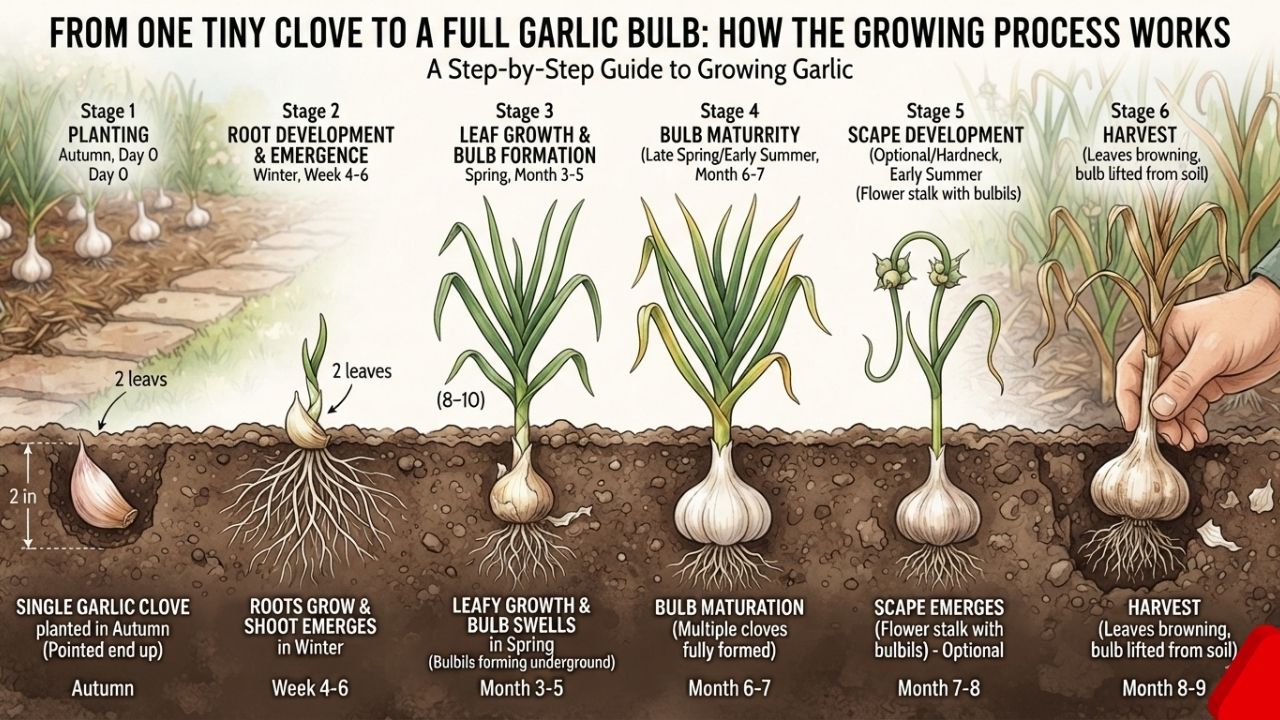
The journey begins in the autumn or early winter when the weather turns crisp. Garlic needs a period of cold weather to trigger its growth process. You do not plant the whole bulb; instead, you break it apart and plant the individual cloves one by one.
Every clove must be planted with the fat, flat bottom facing down into the dirt and the pointy end facing up toward the sky. You bury it a few inches deep so the winter frost does not push it back out of the ground.
- The clove uses its stored energy to push out tiny white roots from its base.
- A small green shoot starts to push upward through the dark soil.
- The cold winter air tells the clove to split into multiple sections later.
- A layer of straw mulch keeps the young roots safe from extreme freezing.
The Spring Growth Spurt
When the sun comes out and the soil warms up in the spring, the garlic plant wakes up and grows very fast. This is the time when the plant focuses all its energy on growing big, strong green leaves above the ground.
The size of the leaves matters because each leaf represents a layer of paper skin around the bulb later on. More healthy leaves mean a larger, better-protected garlic bulb under the ground. During this stage, the plant needs plenty of water and nutrients from the soil to support its rapid growth.
The Hidden Bulb Transformation
As the days get longer and hotter in the late spring, the plant stops making new leaves. It shifts its focus from the top leaves down to the roots. The base of the stem, right above the roots, begins to swell up.
This is the exact moment when the single original clove multiplies. It draws energy down from the green leaves to form a cluster of brand-new cloves. The old outer skin of the original clove stretches out and turns into the thin, papery wrapper that holds the new bulb together.
| Growth Stage | What Happens Under the Dirt | Visible Signs Above Ground |
|---|---|---|
| Winter | Roots grow long and anchor into the soil. | A single short green shoot appears. |
| Spring | The base of the stem begins to thicken up. | Many tall, thick green leaves grow. |
| Early Summer | Cloves separate and grow outer paper skins. | Leaves stop growing and start turning yellow. |
Harvest Time and Curing the Bulbs
By mid-to-late summer, the garlic bulb is fully formed and ready to come out of the earth. You can tell it is ready because the lower leaves will turn brown and dry out, while only the top few leaves stay green.
You carefully dig the bulbs out of the ground using a garden fork so you do not bruise them. Once harvested, the garlic needs to go through a process called curing. You leave the roots and leaves attached and hang the plants in a shaded, dry place with plenty of air moving around for a few weeks. Curing dries out the outer skins, which seals the flavor inside and allows you to store the garlic for many months.
Watching a single clove grow into a full head of garlic takes time, but it requires very little daily work. By following the natural seasons of cold and warmth, the plant does all the heavy lifting on its own under the soil.