
 Join WhatsApp
Waking up on an Australian farm can feel a world away from city life. There may be no traffic outside the house, no busy streets and no alarm of a nearby building site. Instead, the morning can begin with birds, animals and the first light coming across the paddocks. But behind that peaceful view is a working day that can start very early and keep changing depending on what needs to be done.
The morning can start before sunrise
On many Australian farms, the day begins while it is still dark. A dairy farmer may already be getting ready for the morning milking, while someone looking after cattle or sheep may be checking animals, water and fences. The exact routine is different on every farm, but farm work often starts when the animals, crops or weather require it rather than at a fixed office hour.
The early start can also be practical. During hot parts of the year, farmers may prefer to get some outdoor jobs done while the temperature is lower. By the time the sun is high, some of the hardest work may already be finished.
The first job is often a quick check around the farm
Before the main work begins, there is usually plenty to look at. Farmers may check whether animals are healthy, whether gates and fences are in good condition and whether water is reaching the places where it is needed. On a cropping farm, the first check may be a look at the fields and plants.
A problem found during this first check can change the entire day’s plan. A broken fence might need fixing immediately, an animal may need attention or a piece of machinery may refuse to start. Farm work often involves dealing with these small surprises as they appear.
The sounds are nothing like a city morning
The first thing a visitor may notice is how different the farm sounds. Instead of traffic and buses, there may be birds in the trees, cattle calling, sheep moving around or farm dogs making noise when people start moving about.
The quiet does not always last. Tractors, utes, pumps and other machinery can quickly bring the farm to life. On a dairy farm, the milking shed can become busy very early, while on a cropping farm the sound of a tractor may signal the beginning of a long day in the paddock.
Breakfast does not always happen at the same time
Farm life does not always fit neatly around regular meal times. Some people have breakfast before starting work, while others may get a job done first and eat afterwards. If animals need attention or a machine has to be moved before the weather changes, those jobs can take priority.
The plan for the morning can also change quickly. A farmer may have several jobs in mind but suddenly spend an hour repairing a broken fence or dealing with an animal that needs help. That is a normal part of working on a farm, where not everything can be planned in advance.
Every type of farm has a different morning
An Australian dairy farm does not operate in the same way as a cattle station, grain farm or vegetable farm. Dairy farmers may spend much of the early morning milking cows and caring for calves. Livestock farmers may check animals, move stock or prepare feed, while crop farmers may spend time checking paddocks and machinery.
Vegetable growers can have another kind of busy morning because produce may need to be harvested, sorted and prepared while it is still fresh. The season also matters. Planting time, harvest time and quieter periods can all bring very different daily routines.
Some common morning jobs include:
- Checking animals, water, fences and gates.
- Inspecting crops and paddocks for problems.
- Preparing tractors, utes and other equipment.
- Feeding animals, harvesting produce or moving livestock.
Weather can change the whole plan
Farmers pay close attention to the weather because it can affect almost every part of the working day. Rain can delay machinery work or make paddocks difficult to use, while very hot conditions can make physical work harder. Dry weather can also affect pasture and water supplies for livestock.
This means a farmer can wake up with one plan and change it completely a few hours later. A useful shower of rain might mean putting machinery away, while a long dry period may mean spending more time looking after animals and finding enough feed and water.
The peaceful view hides a lot of work
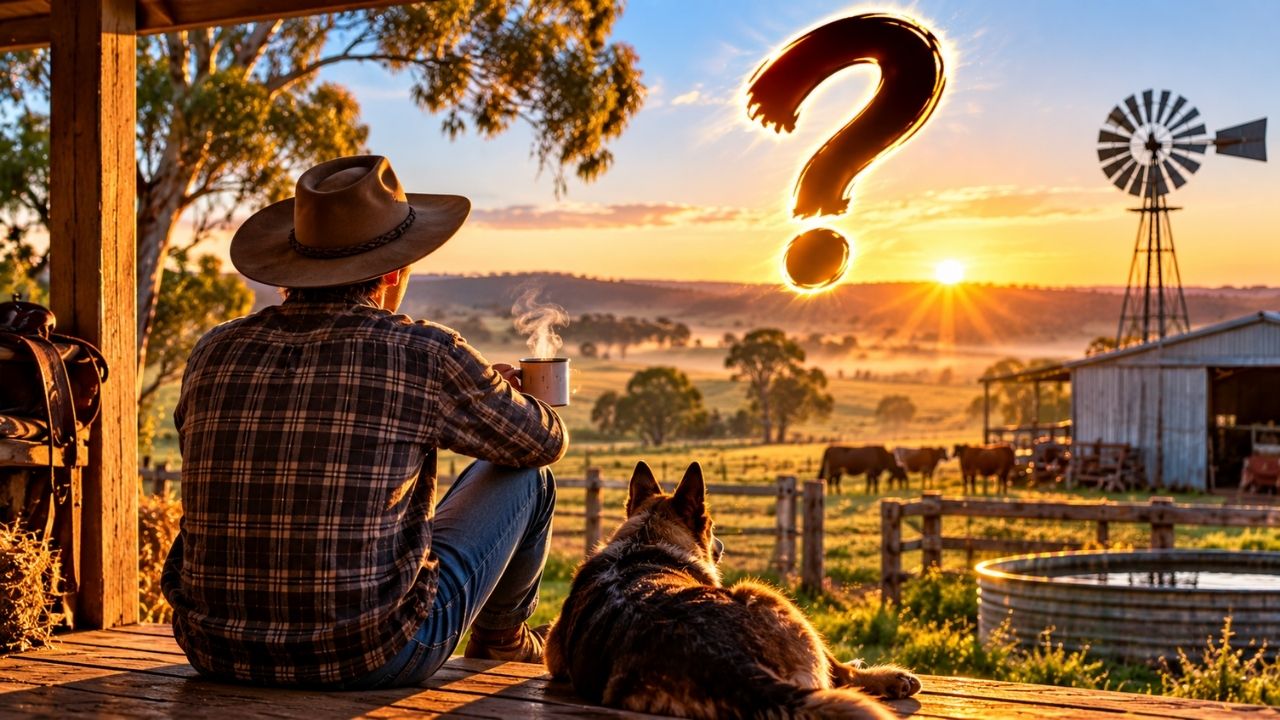
Australian farms can look wonderfully quiet in photographs. Wide fields, old sheds, animals and a sunrise can make farm life appear simple and relaxed. The reality is much more demanding.
There can be long hours outside, heavy work, machinery to operate and maintain, fences to repair and animals that need attention every day. Farmers also have to deal with paperwork, supplies, bills, repairs and the many decisions involved in keeping a farm running.
Some work is also physically tiring. Walking across paddocks, lifting equipment, working around animals and spending hours in the sun can make a normal farm day very different from sitting at a desk.
Large farms can mean long distances
Australia has some very large farming properties, particularly in areas used for cattle and sheep production. On these properties, simply getting from one part of the farm to another can take time.
A farmer may need to drive a considerable distance to check animals, inspect water or reach a paddock. That open space can be beautiful, but it also means that farmers need to be prepared for problems when they are far from the main house or other people.
For someone who has only experienced city or suburban life, the size and emptiness of some Australian farming areas can be one of the biggest surprises.
Home and work are often the same place
For many farming families, the farm is both their home and their workplace. There is no long commute in the morning, but there is also no clear point where the working day always ends.
A farmer might walk from the house to the sheds, spend several hours working outside and then come back for a meal before heading out again. Children growing up on farms may also become familiar with animals, machinery and farm jobs as part of everyday family life.
This can create a lifestyle that feels very different from working in a town or city. The work is always close by, and something that needs attention can appear at almost any time.
The day can continue well after sunset
Getting up before sunrise does not guarantee an early finish. There may be another milking in the afternoon, animals that need checking, machinery that needs repairing or a job that has to be finished before the weather changes. Harvest time can be especially busy because crops may need to be collected when they are ready. That can mean long days, sometimes with work continuing into the evening. For farmers, the end of the day is often less about a fixed finishing time and more about reaching the point where the important jobs are done.
So what is it really like?
Waking up on an Australian farm can be peaceful, but it is not an easy life. The sunrise, open paddocks and quiet surroundings are certainly part of it, but they come with animals to care for, equipment to maintain, weather to watch and work that cannot always wait.
Every morning can be slightly different. One day may go exactly as planned, while the next can be taken over by rain, a broken machine, a sick animal or an urgent job. That uncertainty is one of the things that makes farm life so different from a normal office routine.
For someone visiting an Australian farm, the morning may seem like a beautiful escape from the busy world. For the people who live there, it is the beginning of another working day, and usually there is already plenty waiting to be done.