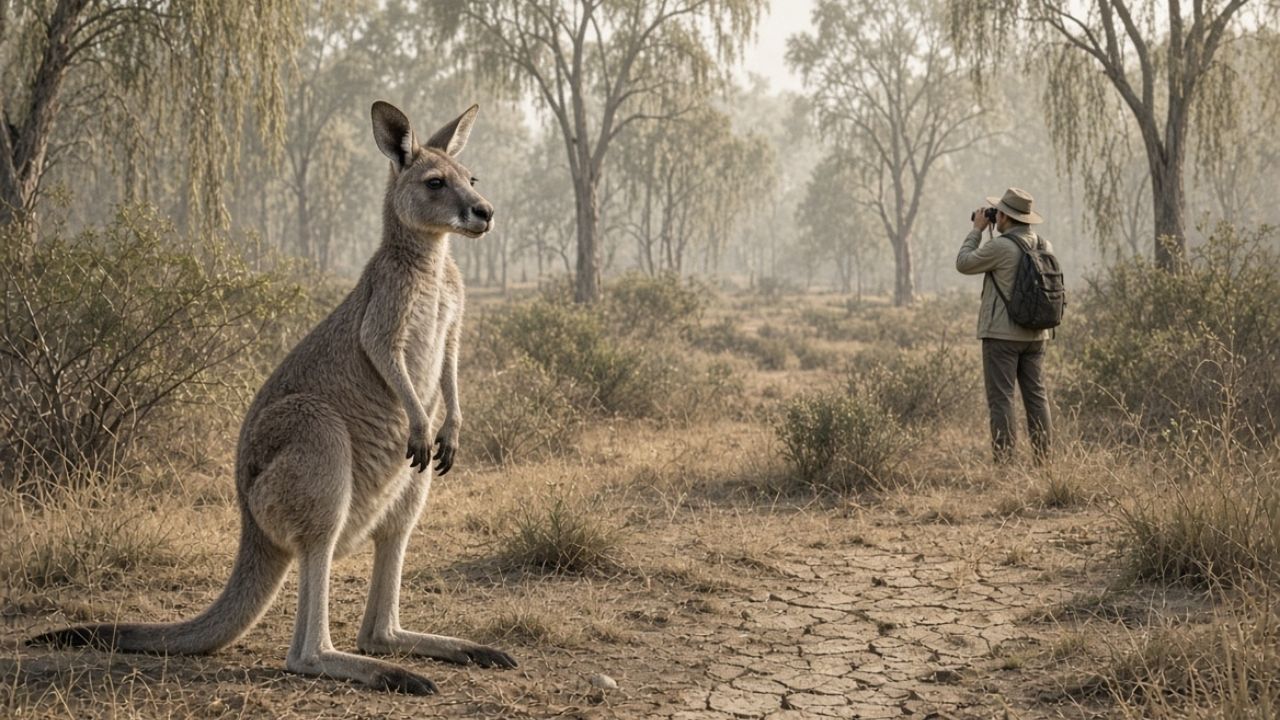
Australia’s spring weather is changing, and it is making life harder for many native animals. Experts are seeing the effects already, and they are watching a few key species closely to understand what comes next.
The big picture: why spring matters so much
Spring is a critical time for Australian wildlife. It is when many animals breed, find food, and raise their young. But the weather during spring is becoming less predictable. Some areas are getting hotter. Some are getting drier. And the rain does not come when it used to.
This matters because animals have adapted to the old patterns. When the patterns change, their bodies and behaviours do not always keep up. Experts say the problem is not one big event, but many small changes that add up over time .
Superb fairy-wrens: a warning sign
One of the animals experts are watching most closely is the superb fairy-wren. It is a small, colourful bird that many Australians know and love. It has even been voted Australia’s favourite bird twice .
Scientists have studied superb fairy-wrens in Canberra for nearly 30 years. They have tracked the birds week by week, through every season. What they found is worrying. Dry springs mean the birds breed less successfully. Warm winters and hot summers reduce how long adults survive. Each of these effects is small on its own, but together they are pushing the population down .
Researchers now predict the superb fairy-wren could disappear from some areas within the next few decades if climate change continues on its current path. They call it a “canary in the coal mine” — a sign that other common species may also be in trouble .
Koalas: heat is only part of the story
Koalas are another species under pressure. A recent study looked at nearly 12,000 koala hospital records in New South Wales. It found that when temperatures went above 27 degrees Celsius for several days in a row, the chance of a koala being admitted or dying went up. When temperatures passed 30 degrees, that risk increased by 1.5 to 3.5 times .
But some experts say heat is not the only thing going on. The spring and summer breeding season is also the time when koalas move around the most. They travel long distances looking for mates and territory. That movement puts them near roads, dogs, and other dangers. So the higher number of koalas in care during hot months might partly be because more koalas are on the move, not just because of the heat .
Still, the long-term trend for koalas is not good in some areas. In parts of inland New South Wales, where drought and heat have been severe, koala populations have fallen sharply. One area that was once called the “koala capital of the world” is now considered functionally extinct .
The reef: coral under stress
The Great Barrier Reef is also in the spotlight. Scientists are warning that a strong El Niño event could bring severe coral bleaching. Bleaching happens when ocean water stays too warm for too long. Corals lose the algae that give them food and colour. If the heat lasts, the corals can die .
The reef has already been through six mass bleaching events since 2016. It is weaker than it used to be. Researchers say the next major heat event could cause local extinctions of some coral species and push parts of the reef into ecosystem collapse .
This matters for wildlife because the reef supports thousands of species. Fish, turtles, sharks, and many other creatures depend on healthy coral. When the reef suffers, they suffer too.
What experts are watching for next
Experts are not just looking at individual species. They are watching how different pressures combine. Heat, drought, fire, and habitat loss do not happen one at a time. They happen together, and they make each other worse.
Here are some of the things researchers are monitoring:
- How spring rainfall affects breeding success for birds and other animals
- Whether heatwaves cause large numbers of wildlife deaths in a single event
- How bushfires change the places animals live and find food
- Whether species can move to cooler areas, or if their habitat is too fragmented for them to escape
- How much the reef recovers between bleaching events, or if it has no time to bounce back
What it means for the future
The picture is not simple. Some species may cope better than others. Some may move. Some may decline. But the overall trend experts see is that many animals are under more stress than before, and the stresses are piling up.
The common thread in all this is that small changes, repeated over many years, can lead to big problems. That is why scientists keep watching. They want to understand what is happening before it is too late to act.
For anyone who cares about Australian wildlife, the message is clear. Spring is not just a season of new life anymore. It is also a season of pressure. And what happens in spring shapes what happens for the rest of the year.