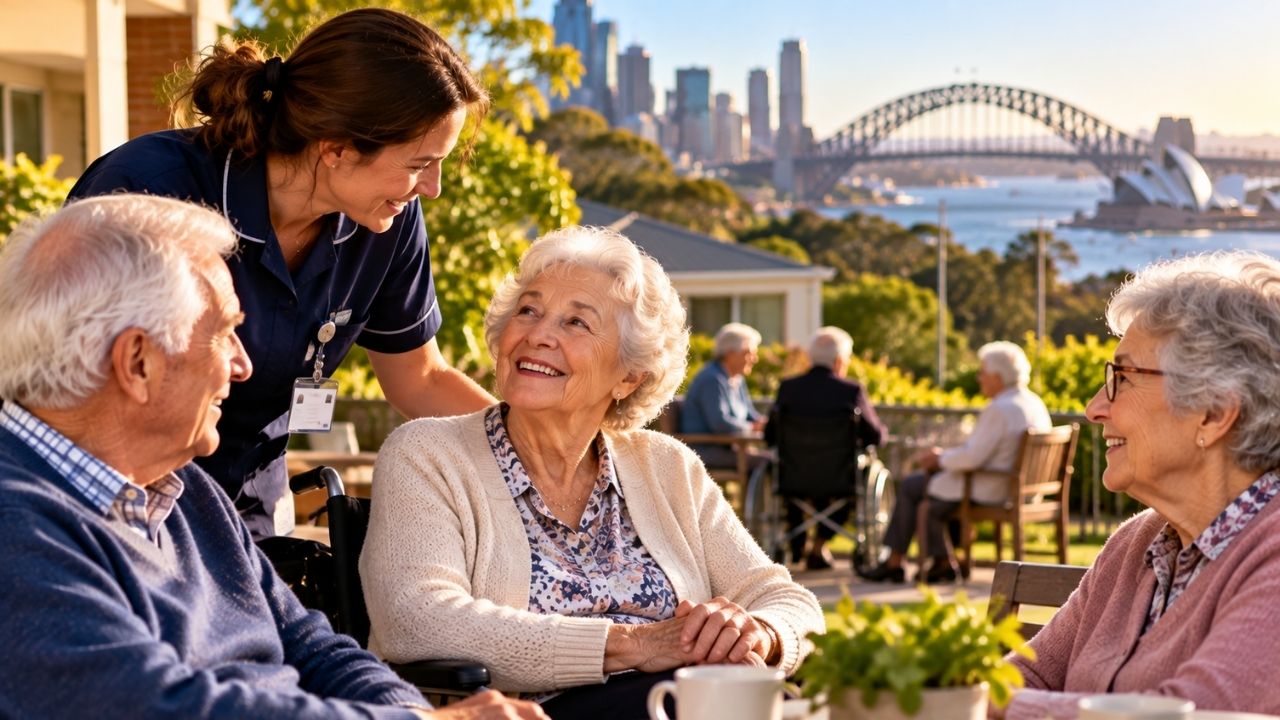
Australia is getting older, and the fastest-growing part of the older population is people aged 85 and over. The latest 40-year population outlook shows that the number of Australians in this age group is expected to more than triple.
That change will be felt well beyond hospitals and aged-care homes. Local communities will need to think about housing, transport, health services, carers, shops and community facilities as more people reach their 80s and 90s.
The number of over-85s is expected to triple
The latest 2026 Intergenerational Report projects that Australia’s population aged 85 and over will grow from about 603,000 people in 2024–25 to 1.9 million by 2065–66.
That is much faster growth than the overall older population. The number of Australians aged 65 and over is expected to roughly double during the same period, from 4.8 million to 9.7 million.
| Age group | 2024–25 | 2065–66 projection |
|---|---|---|
| 65 and over | 4.8 million | 9.7 million |
| 85 and over | 603,000 | 1.9 million |
The difference matters because people in their mid-80s and beyond are more likely to need help with health, mobility and everyday activities than younger retirees.
Why is Australia getting older?
Two major changes are driving the shift: Australians are living longer and families are having fewer children.
Australia’s median age was 38.4 years in 2024–25. It is projected to reach 43.7 years by 2065–66. At the same time, the fertility rate has fallen well below the level needed to replace the population naturally.
Longer lives are an important part of the story. Life expectancy has increased significantly over recent decades, meaning more people are reaching older ages than in the past.
The result is a population with a much larger share of people in their 70s, 80s and 90s.
Communities will need more health and care services
One of the clearest effects will be greater demand for health and aged-care services.
The Australian Institute of Health and Welfare says many health conditions become more common with age, which increases demand for health and aged-care services.
The change will not affect only large hospitals. Local doctors, pharmacies, allied health services, home-care workers and community health programs may all see greater demand.
For people living outside major cities, access can be a bigger issue. Australia has a large regional and remote population, and some communities have fewer health and care services nearby.
More people may need help at home
Growing numbers of very old Australians could also increase demand for services that help people remain in their own homes.
That can include help with meals, cleaning, personal care, transport and medical appointments. Family members may also provide unpaid care.
Australia already has a large number of people providing unpaid care to others. As the number of people aged 85 and over grows, families and communities may need more support to manage these responsibilities.
The goal is not necessarily for every older person to move into residential aged care. Many people may prefer to remain at home for as long as they can, provided suitable support is available.
Housing may need to change too
An ageing population creates a different set of housing needs.
Older people may want homes that are easier to move around in, with fewer stairs, safer bathrooms and better access to shops and services. Some may also want smaller homes that require less maintenance.
Communities may therefore need more housing that is close to medical services, public transport, shops and community facilities.
This can be particularly important for people who stop driving as they get older. A home may be suitable when someone is 65 but become much harder to manage at 85 if essential services are far away.
Transport will become more important
Driving is an important part of everyday life for many older Australians, particularly outside major cities.
But as people age, some eventually reduce or stop driving. This can make access to buses, community transport, taxis and other services more important.
A community with a large older population may therefore need transport options that make it possible for residents to reach doctors, supermarkets, pharmacies and social activities without depending entirely on family members.
Good footpaths, crossings and accessible public transport can also make a difference.
Local businesses could see changing demand
Population ageing will also change what local businesses provide.
A growing number of older residents can create more demand for health-related services, home maintenance, personal services, accessible transport and businesses that cater to people with limited mobility.
At the same time, older Australians are not all the same. Many remain active, travel, shop locally and take part in community activities.
This means an older population should not simply be viewed as a group needing care. It is also a large and changing group of consumers, workers, volunteers and community members.
Some communities will feel the change more strongly
The ageing population will not affect every part of Australia in exactly the same way.
Major cities will have large numbers of older residents simply because they contain most of Australia’s population. But some regional and coastal communities already have older population profiles.
The location of health services, housing and transport will therefore matter. A rapidly ageing community may need to plan differently from an area where the population is younger.
The broader population is also expected to continue growing, reaching about 41 million by 2065–66.
The health system faces a growing workload
The increase in the over-85 population is especially important for health planning because the need for health services generally rises with age.
The 2026 Intergenerational Report says population ageing will increase demand for health services and that one-third of new health spending over the next 40 years is expected to be linked to ageing.
That does not mean every older person will have high medical costs. Many Australians remain healthy for many years after retirement.
But when the number of people reaching their late 80s and 90s becomes much larger, even the same level of health needs per person can create much greater total demand.
More workers will be needed in care services
More older Australians also means greater demand for people working in health and social assistance.
This includes nurses, doctors, aged-care workers, physiotherapists, occupational therapists, support workers and other staff.
The workforce itself will need to grow to provide these services. This could be particularly challenging in regional areas where it can already be difficult to attract and retain health and care workers.
Technology may help in some areas, but it cannot completely replace the need for people providing hands-on care.
The rise in over-85s will also affect families
The demographic change could be noticeable inside households as well.
More Australians may have parents or other relatives living into their late 80s and 90s. That can mean families spend longer periods helping older relatives with appointments, transport, finances, household tasks or care.
At the same time, better health and longer life can allow older Australians to remain independent and involved with their families for longer.
The challenge for communities will be providing enough support so that caring responsibilities do not fall entirely on family members.
What communities may need to prepare for
The projected increase in people aged 85 and over is not just a population statistic. It points to changes in the way towns, suburbs and cities will need to operate.
Important areas include:
- More accessible homes and housing close to essential services
- Better local health, aged-care and home-support services
- Reliable public and community transport for people who no longer drive
- More workers across health, care and support services
These needs will vary between communities, depending on their population, location and existing services.
A major change over the next 40 years
Australia’s ageing population is not a short-term change. The latest projections show that the number of people aged 85 and over could reach 1.9 million by 2065–66, more than three times the number expected in 2024–25.
For communities, that means planning cannot focus only on how many people live in an area today. Local governments and service providers also need to consider what their populations could look like decades from now.
The biggest changes are likely to be seen in health care, aged care, housing, transport and community support. At the same time, millions of older Australians will continue to contribute through work, volunteering, family life and local activities.
Australia is therefore heading towards a future where living into the 80s and 90s becomes increasingly common. How well communities adapt will depend on whether services, homes, transport and local infrastructure grow alongside the people who need them.