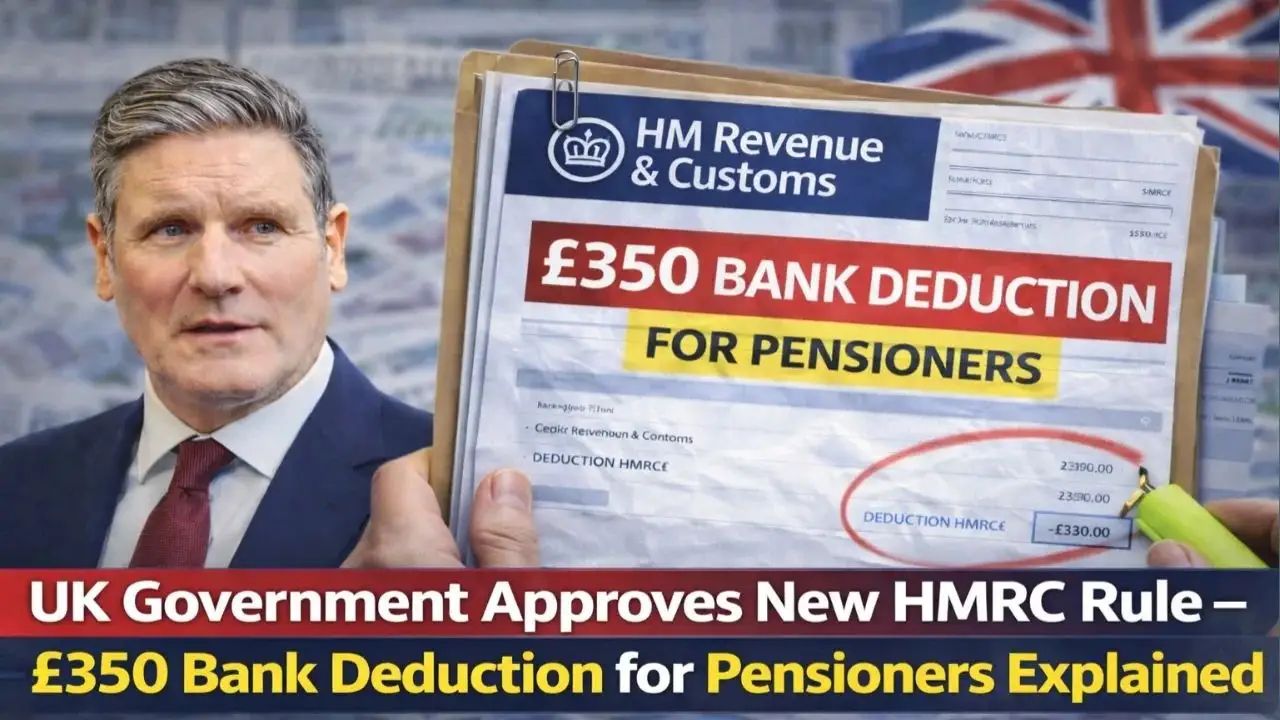
A claim about a new HMRC rule allowing a £350 deduction from pensioners’ bank accounts has been causing concern among older people in the UK. But the real position is very different from the headline.
There is no confirmed UK government rule in 2026 that gives HMRC a general power to take £350 directly from every pensioner’s bank account. HMRC can collect tax in certain circumstances, but the official rules do not show a new blanket £350 bank deduction for pensioners.
What Is the £350 Claim Really About?
The £350 figure appears to be part of wider online discussion about pensioners, tax and government payments. It should not be understood as a standard amount that HMRC will automatically remove from a pensioner’s bank account.
HMRC can collect tax that someone owes through normal tax systems. This can include changing a person’s tax code or collecting tax through Self Assessment. The method depends on the person’s circumstances and the type of income involved.
The government has also confirmed changes affecting Winter Fuel Payments. For 2026, people with total income above £35,000 can have their Winter Fuel Payment recovered through the tax system. HMRC says this is done by changing the tax code or adding the amount to a Self Assessment tax return, rather than simply taking the money directly from a bank account.
Is HMRC Taking £350 Directly From Pensioners’ Banks?
No general £350 automatic bank deduction rule has been confirmed by the UK government.
This is an important difference because a tax deduction through PAYE is not the same thing as HMRC directly taking money from a person’s bank account.

For example, if HMRC changes someone’s tax code, the tax may be collected gradually from taxable income before the money reaches the person’s bank account. The person may therefore receive a smaller pension or other payment after tax, but that does not mean HMRC has taken money directly from the bank.
Why Are Pensioners Hearing About HMRC Deductions?
The confusion is partly linked to changes in the way some pensioners’ tax is handled. The State Pension itself is taxable income, although many pensioners do not actually pay Income Tax because their total taxable income may remain within their Personal Allowance.
For the 2026/27 tax year, the standard Personal Allowance remains £12,570. The full New State Pension for 2026/27 is £241.30 a week, or £12,547.60 a year, which is just below that allowance before considering any other taxable income.
This means a person receiving only the full New State Pension may not normally have Income Tax to pay simply because they receive the State Pension. The situation can change if they also have private pension income, employment income, savings income or other taxable income.
What About the Winter Fuel Payment?
This is where another amount can become important for pensioners.
For winter 2026 to 2027, eligible people can receive a Winter Fuel Payment of either £200 or £300 depending on their age and circumstances. The government has also introduced an income limit of £35,000 for the payment.
If a person’s total income is above £35,000, HMRC will recover the Winter Fuel Payment through the tax system. The government guidance specifically says HMRC can do this by changing the person’s tax code or by adding the amount to their Self Assessment tax return.

So this is not the same as a new £350 bank deduction.
| Claim | Actual position in 2026 |
|---|---|
| HMRC will automatically take £350 from every pensioner’s bank account | Not confirmed |
| Everyone receiving State Pension will lose £350 | No |
| Winter Fuel Payment can be recovered from higher-income recipients | Yes |
| Winter Fuel recovery can be made through the tax code | Yes |
| Winter Fuel recovery can be collected through Self Assessment | Yes |
| Everyone will have the same deduction | No |
Who Could Actually Pay More Tax?
A pensioner can have a tax bill if their total taxable income is higher than their available tax-free allowance.
This can happen when someone receives the State Pension alongside a private pension, workplace pension, employment income or other taxable income. HMRC then works out the person’s tax position and may adjust their tax code.
The important point is that the amount is based on the individual’s income and tax position. There is no standard £350 charge that applies simply because someone is a pensioner.
How HMRC Normally Collects Tax
Most pensioners do not have to manually send money to HMRC every time tax is due. When a person receives taxable income through a system where PAYE applies, HMRC can adjust the tax code used by the pension provider or employer.
This means the correct amount of tax can be taken from future payments.
For some people, especially those who complete Self Assessment, tax can instead be dealt with through their tax return.

HMRC’s official guidance on pension tax explains that tax codes can be changed when HMRC needs to collect tax from pension income.
Could Your Pension Payment Be Lower?
Yes, a pension payment can be lower after a tax code change, but that does not mean every pensioner will see the same reduction.
If HMRC calculates that additional tax is due, the tax code may be adjusted so that more tax is collected from future taxable payments. The size of the change depends on the person’s income and the amount of tax that needs to be collected.
For this reason, a pensioner should not assume that a headline figure such as £350 will apply to them.
What Should Pensioners Do If They See an Unexpected Deduction?
If your pension or other income suddenly changes, the first thing to do is check the paperwork rather than assuming it is a new government charge.
Look at your latest HMRC tax notice, tax code and pension payment details. These documents should help explain whether the change is related to Income Tax, a tax-code adjustment or another payment issue.
- Check your latest HMRC tax code and tax calculation.
- Check whether you receive taxable income in addition to the State Pension.
- Check any letter or notice explaining a change in your tax position.
- Contact HMRC if the figures do not match your own records.
A genuine tax deduction should have an explanation behind it. Pensioners should be particularly careful about messages claiming that HMRC will suddenly take money from their bank account.

Be Careful With Messages About HMRC Bank Deductions
Scammers can use pension and tax changes to make frightening messages look genuine. A message saying that HMRC is about to remove hundreds of pounds from your bank account may encourage someone to click a link or provide personal information.
Do not give your bank details, passwords or security codes to someone who contacts you unexpectedly and claims to be from HMRC.
If you are unsure about a tax change, use the official government services rather than relying on a message, social media post or unofficial website.
What Pensioners Should Know About 2026
The main message for pensioners is simple: there is no confirmed blanket £350 HMRC bank deduction applying to pensioners in 2026.
There are genuine tax and benefit changes that can affect some older people, including the recovery of Winter Fuel Payments from people whose income is above £35,000. But the government says that recovery is handled through the tax system, such as a tax-code adjustment or Self Assessment.
The amount a pensioner pays depends on their own circumstances.
Official Government Information
For the most accurate information about tax on pension income, pensioners should use the official UK Government guidance on tax and your pension.

For the 2026 Winter Fuel Payment rules, the official government information explains the £35,000 income threshold and how HMRC can recover payments from people above that threshold.
Verdict
The headline claiming that the UK Government has approved a new £350 HMRC bank deduction for pensioners is misleading. There is no general rule in the official 2026 guidance saying that HMRC will automatically take £350 directly from every pensioner’s bank account.
There are real changes involving tax and pensioner payments. In particular, people with income above £35,000 can have their Winter Fuel Payment recovered through the tax system, with HMRC using a tax-code change or Self Assessment.
For pensioners, the safest approach is to check the exact reason for any change in their payment. A tax code, private pension income or Winter Fuel Payment recovery can affect the amount received, but the result depends on the individual’s circumstances.
So if you see a claim that every UK pensioner is facing a £350 automatic bank deduction, do not assume it is true. Check the official HMRC information and your own tax records before taking any action.