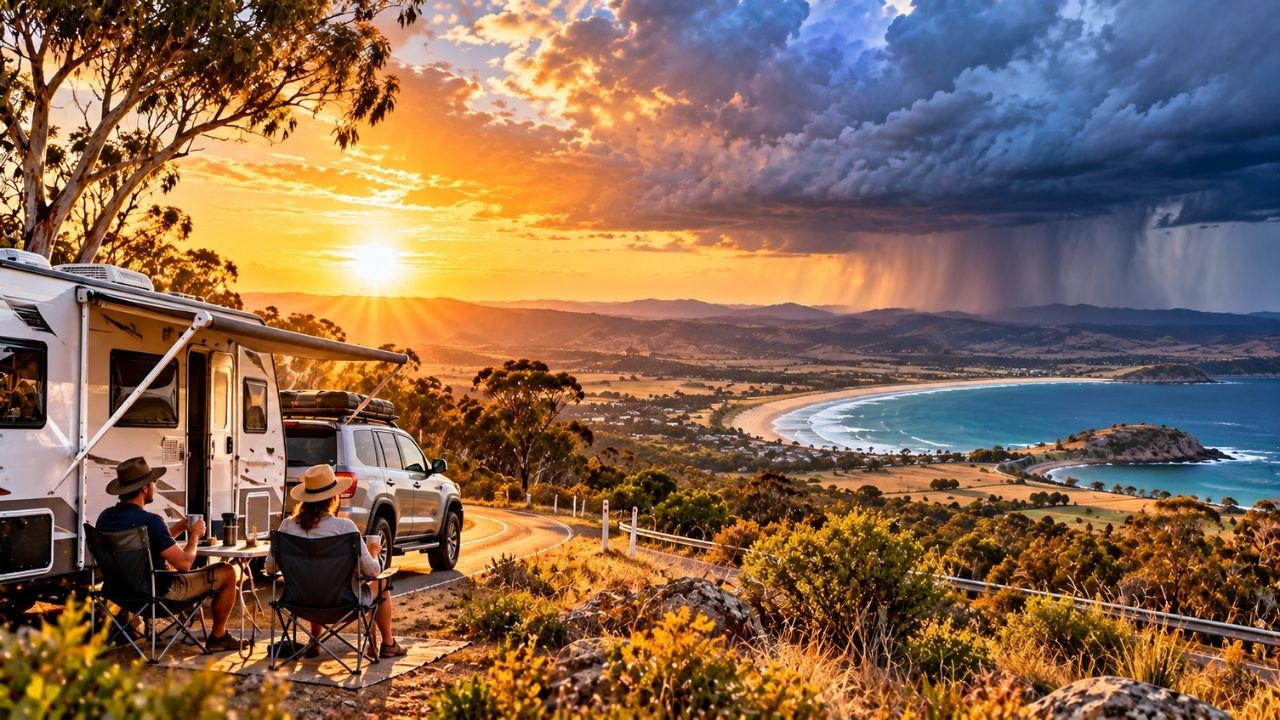
El Niño is getting stronger over Australia and it will likely stick around through spring. For anyone planning a caravan trip, that means warmer days are almost certain, but the rain picture is more complicated than you might think.
What is happening with El Niño right now
El Niño is a natural climate pattern that starts with warmer-than-normal ocean water in the Pacific Ocean. When this happens, it changes wind and weather patterns around the world, including here in Australia .
The Bureau of Meteorology officially declared El Niño was underway in June 2026. Since then, it has kept getting stronger. By late August, the key measure of El Niño strength had reached levels well above the threshold used to declare an event .
Forecasters say this could become one of the strongest El Niño events on record, possibly the strongest since reliable records began in 1950 . The event is expected to keep strengthening through spring before peaking in late spring or early summer .

The simple version: what El Niño usually means
In simple terms, El Niño usually brings two main things to Australia: warmer temperatures and less rain than normal, especially across eastern and southern parts of the country .
But here is the important catch. The Bureau of Meteorology has made it very clear that El Niño is not the only thing that controls our weather. Other factors can boost its effects, weaken them, or even work against them completely .
This year, there is a big factor working against El Niño’s drying influence: the oceans around Australia are unusually warm. Warm water near our coast puts more moisture into the air, which can help rain systems form even during an El Niño year .
What this means for spring temperatures
This is the part where the forecast is most straightforward. Spring 2026 is very likely to be warmer than average across most of Australia .

For caravanners, this means you should expect hot days, especially if you are travelling through inland areas or the southern states. Daytime temperatures could be well above what you are used to for this time of year .
The Bureau’s long-range forecast shows most of the country has a high chance of above-average temperatures from October through December .
What this means for rain and travel conditions
The rainfall picture is where things get messy. It will not be dry everywhere, and it will not be dry all the time.
Here is the broad pattern expected for spring:
- Southern and eastern Australia (including southern NSW, Victoria and Tasmania) are more likely to see below-average rainfall
- Western Australia and parts of central and northern Australia are more likely to see above-average rainfall
- Some areas may still get heavy rain events, even during a strong El Niño year
For caravanners, this means you cannot assume it will be dry just because El Niño is strong. The Bureau has stressed that every El Niño is different, and a strong event does not always cause severe impacts .
What this means for popular caravan routes
If the forecast plays out as expected, some outback tracks could become more accessible. Drier conditions in central Australia often mean fewer road closures from flooding, which is good news for routes like the Birdsville Track or the Oodnadatta Track .
But there are downsides too. Hotter and drier conditions increase bushfire risk, which can close national parks and remote roads with little warning . Dust and corrugations can also become worse on unsealed roads during extended dry periods .
In Western Australia, where above-average rain is forecast, some tracks that are usually passable in spring might be wetter than normal. This could mean more mud, more road closures, and more planning needed.
Practical things to think about before you go
Here are some simple things to keep in mind if you are heading off on a caravan trip this spring:
- Check road conditions before you travel, especially if you are going remote. Conditions can change quickly.
- Be ready for heat. Make sure your cooling system, tyres and batteries are in good shape. Hot weather puts extra stress on your vehicle .
- Carry extra water. Remote areas can run low during dry spells, and you do not want to be caught short.
- Have a plan B. If a road is closed or a park is shut due to fire danger, you will want another option ready.
- Watch the forecast as you go. Long-range forecasts give you the big picture, but they cannot tell you exactly what will happen on a specific day.
The bottom line
El Niño is getting stronger, and spring will almost certainly be warmer than usual for most of Australia. But the rain is not as simple as “El Niño means drought.” Some places will be drier, some will be wetter, and some might still get heavy rain events.
For caravan trips, this means staying flexible and staying informed. The Bureau of Meteorology’s long-range forecasts are updated regularly and are the best guide for what is coming. You can check them at the Bureau of Meteorology website.
A warmer spring does not mean you should cancel your trip. It just means you should plan for hot days, keep an eye on conditions, and be ready to change your route if you need to.