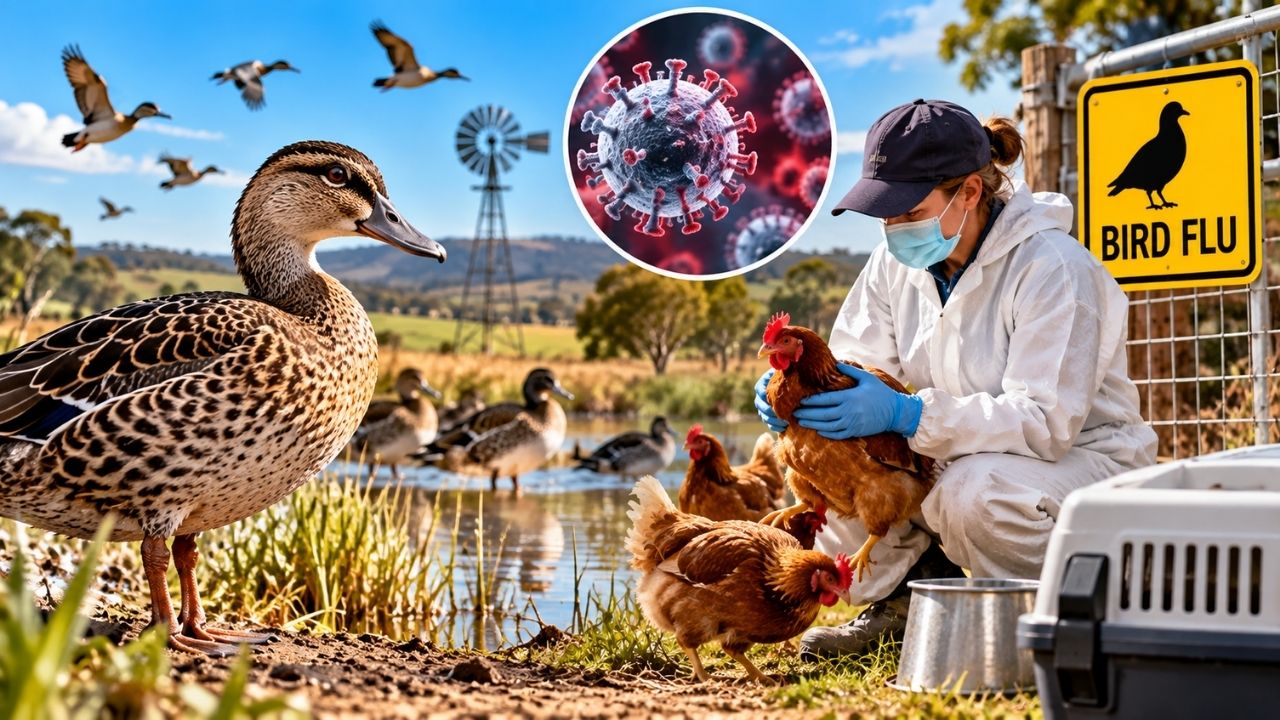
Australia’s H5 bird flu situation has changed significantly in recent months, with the virus now being detected in a growing number of wild birds and some mammals.
The latest government figures show hundreds of confirmed wildlife events across the country. The detections include seabirds as well as mammals such as a long-nosed fur seal and a red fox.
For people who keep chickens, own cats or dogs, or regularly spend time around wildlife, the message from authorities is straightforward: avoid contact with sick or dead animals and take extra care with biosecurity.
H5 bird flu is now present in several parts of Australia
The Australian Government recorded 650 confirmed H5 bird flu events in wildlife as of 24 September 2026.
South Australia had the highest number, followed by Victoria. New South Wales and Tasmania have also recorded numerous events, while detections have been reported in Western Australia, Queensland and the Jervis Bay Territory.
The way Australia reports the outbreak has also changed. Since August, authorities have reported “events” rather than simply counting individual infected animals. One event can involve one or more animals.
That means the latest figure should not be interpreted as exactly 650 infected individual animals. It represents confirmed wildlife events investigated by state and territory authorities.
The virus is not limited to wild birds anymore
H5 bird flu mainly affects birds, but infected wildlife can sometimes pass the virus to other animals.
One important development came in August when authorities confirmed H5 bird flu in a red fox in metropolitan Adelaide. It was the first detection in a land mammal in Australia.
Earlier, a long-nosed fur seal in South Australia had tested positive. More recently, four Australian sea lions on South Australian islands also tested positive.
Authorities say there is currently no evidence of mammal-to-mammal transmission associated with H5 bird flu in Australia. The detections in mammals are considered possible spillover events linked to infected wildlife.
For animal owners, this is important because it shows why pets should not be allowed to investigate or eat dead wildlife.
What this means for chickens and backyard poultry
There is currently no evidence that H5 bird flu has entered Australia’s poultry or agricultural production system.
That does not mean backyard poultry owners should ignore the situation.
Chickens, ducks and other domestic birds can become infected with avian influenza if they come into contact with infected wild birds or contaminated material.
Owners can reduce the risk by limiting contact between domestic birds and wild birds, keeping feed and water protected, and maintaining good hygiene around poultry areas.
If authorities issue specific instructions for a particular area, poultry owners should follow those local requirements.
The current national situation is different from some overseas outbreaks, where H5 bird flu has caused major losses in commercial poultry. Australia is continuing surveillance to detect any possible movement of the virus into domestic birds.
Cats and dogs also need to be kept away from wildlife
The latest detections have also highlighted a potential risk for household pets.
Australian authorities warn that cats and dogs can become infected after contact with infected birds or other animals.
Pet owners should therefore prevent their animals from eating or playing with sick or dead wildlife.
- Keep cats indoors or otherwise prevent them from roaming and hunting wildlife.
- Keep dogs on a leash, particularly when walking near wetlands, beaches and areas where sick or dead wildlife has been reported.
- Keep pet food and water away from wild birds.
- Do not allow pets to touch or eat sick or dead birds or other wildlife.
Authorities also advise people who have directly handled sick or dead birds to shower and change clothes before handling their pets.
What should you do if you find a dead bird?
People should not pick up or move sick or dead wildlife simply to investigate what happened.
The Australian Centre for Disease Control advises people to avoid sick or dead birds and wildlife, including their droppings, feathers, eggs and body fluids.
If multiple sick or dead birds or other animals are found, people should record the location and what they observed and report it through the Emergency Animal Disease Hotline on 1800 675 888.
This reporting is important because wildlife surveillance helps authorities understand where the virus is spreading and which species are being affected.
What about the risk to people?
The Australian Centre for Disease Control currently considers the risk from H5 bird flu to people in Australia to be low.
No human infections with this H5N1 strain have been reported in Australia.
Bird flu infections in humans are uncommon, but the risk is higher following close contact with infected animals or contaminated environments. Staying away from sick or dead wildlife remains one of the simplest ways to reduce exposure.
Properly handled, prepared and cooked meat and eggs are considered safe to eat.
Why animal owners should remain alert
The latest cases do not mean that every Australian pet or backyard chicken is at immediate risk.
However, the geographic spread of H5 bird flu means sensible precautions are becoming increasingly important.
The virus has now been detected in a wider range of wildlife than when the first Australian cases were identified. Authorities are continuing surveillance, while states and territories are responding to new detections.
For animal owners, the most useful approach is not to panic but to reduce unnecessary contact with wild animals.
Keep pets away from carcasses, protect domestic birds from wild birds, maintain good hygiene and report unusual wildlife deaths.
As the Australian Government continues to monitor the situation, those simple measures can help reduce the chance of the virus moving from wildlife into animals that people keep at home.