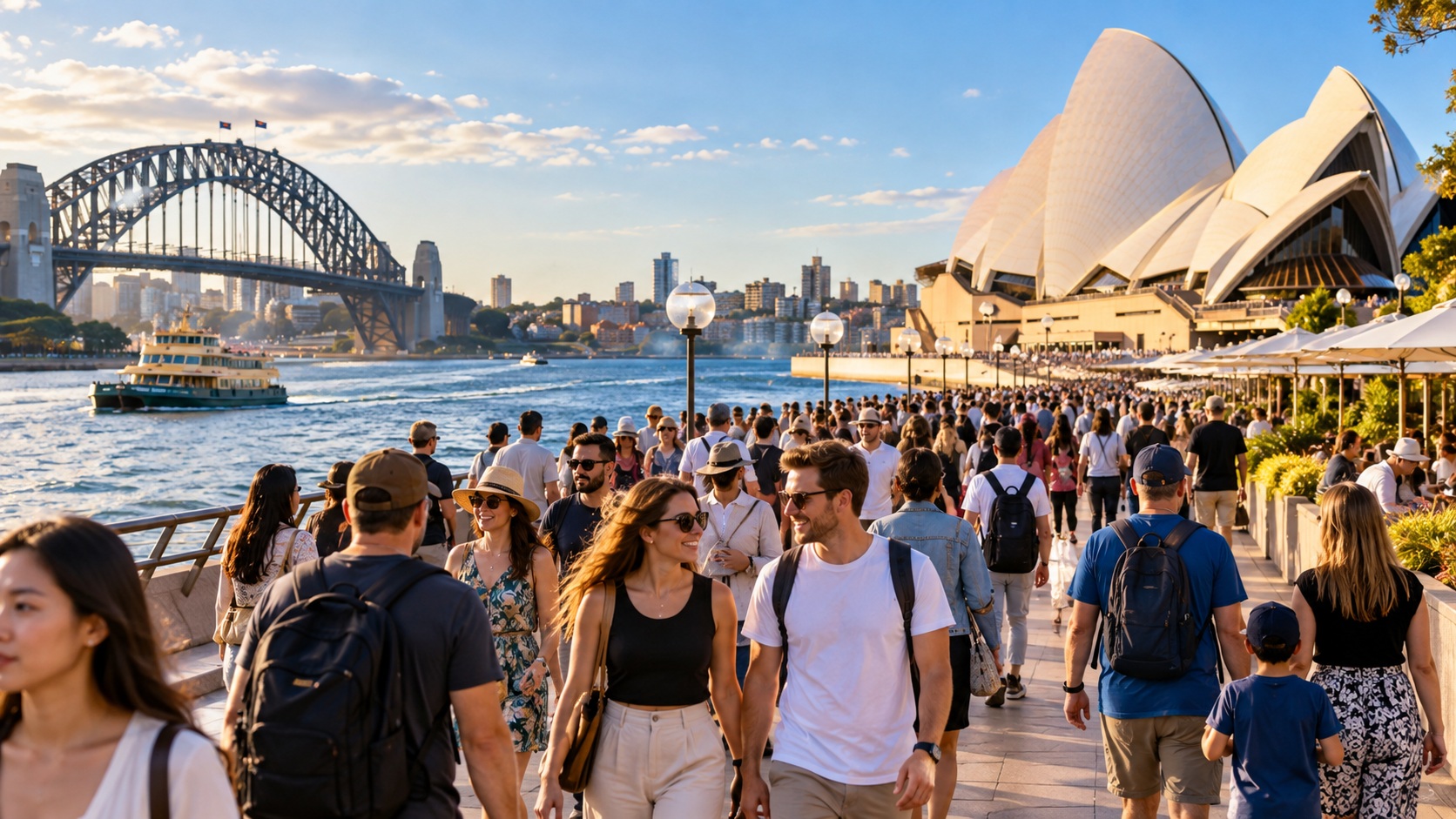
Australia’s population has continued to grow, adding almost 400,000 people over the latest measured period. The increase is changing the size and makeup of communities across the country, with some areas seeing faster growth than others.
The change matters at a local level because population growth can affect housing, transport, schools, health services, shops and other everyday facilities.
Australia’s population has increased strongly
Australia’s population does not grow only because more babies are born. Changes in the number of people arriving in the country, leaving the country and the natural increase in population all play a part.
Recent population data shows that Australia added almost 400,000 people over the period covered by the latest figures. This means the country now has a larger population than it had before, and the effects are being seen in many communities.
Population growth is not spread evenly across Australia. Some cities, suburbs and regional areas are growing much faster than others. This can make the experience of population growth very different from one community to another.
Why the population is growing
There are several parts behind Australia’s population change. Natural increase is one part, meaning there are more births than deaths. Overseas migration is another major part of the change.
People move to Australia for different reasons, including work, study, family and other long-term plans. At the same time, some Australian residents leave the country for periods of time or move overseas.
The overall population figure reflects these different movements rather than one single reason.
Some of the main factors behind population change include:
- More people arriving in Australia than leaving over the period
- Births adding to the population while deaths reduce it
- Continued growth in major cities and selected regional areas
- People moving between different parts of Australia for work, housing and lifestyle reasons
The change is being felt in local communities
A national population figure can sound like a distant number, but population growth becomes much more noticeable at the local level.
When more people move into an area, demand for homes can increase. More residents can also mean more pressure on roads, public transport, schools, childcare, medical services and other facilities.
At the same time, population growth can bring new shops, businesses and jobs. A growing community can create more demand for local services and support new businesses.
The effect therefore depends on how quickly an area is growing and whether homes, roads and public services are keeping up with the increase.
Housing is one of the biggest local issues
Housing is an important part of the population discussion because every new resident needs somewhere to live.
In areas where the number of people is rising quickly, the demand for houses and rental properties can also increase. If new homes are not added quickly enough, people may find it harder to find suitable housing.
Population growth does not automatically mean that house prices or rents will rise by a particular amount. Local housing supply, construction, employment, interest rates and other factors also affect the housing market.
This is why the effect of population growth can be different even between two areas that are both gaining residents.
More people can also mean more pressure on services
Local councils and governments have to plan for changes in the number of people living in an area.
A growing population can increase demand for everyday services such as schools, hospitals, roads and public transport. New housing areas may also need parks, community facilities and other basic infrastructure.
For residents, the change can be noticed through busier roads, longer demand for services or new construction in their area. In other places, growth may lead to new facilities and improvements as governments and businesses respond to rising demand.
The important point is that population growth is not just about the number shown in a national report. It can change how communities work on a day-to-day basis.
Where the impact can look different
Australia has a large land area, and population growth is not evenly shared across the country. Major metropolitan areas remain important population centres, while some regional communities are also attracting new residents.
| Area | Possible effect of population growth |
|---|---|
| Housing | Greater demand for homes and rentals |
| Roads | More vehicles and pressure on busy routes |
| Public transport | Higher demand for buses, trains and other services |
| Schools | More students in growing neighbourhoods |
| Health services | Greater demand for doctors, hospitals and other care |
| Local businesses | More customers and potential new businesses |
| Infrastructure | Greater need for roads, parks and community facilities |
These effects are not the same everywhere. A community with plenty of available housing and infrastructure may experience growth differently from an area where services are already under pressure.
What population growth means for Australia
A larger population can bring both new opportunities and new challenges. More residents can mean a larger workforce, more customers for businesses and greater demand for services. It can also increase the need for new homes and infrastructure.
For governments, one of the main challenges is making sure that population growth is matched by planning and investment. If new neighbourhoods grow quickly, roads, schools, transport and other facilities need to be considered alongside housing.
For local residents, the effects can be much more direct. A growing population can change the character of a suburb or town, increase demand for services and create new businesses and facilities.
The bigger picture
The addition of almost 400,000 people shows that Australia’s population continues to change at a significant pace. But the national number does not tell the whole story.
The real impact depends on where those people live, how quickly local areas grow and whether housing and services expand alongside them. Some communities may welcome new jobs, businesses and facilities, while others may face greater pressure on housing and infrastructure.
As Australia’s population continues to change, local planning will remain important. The way governments, councils, businesses and communities respond will help determine how population growth is experienced on the ground.