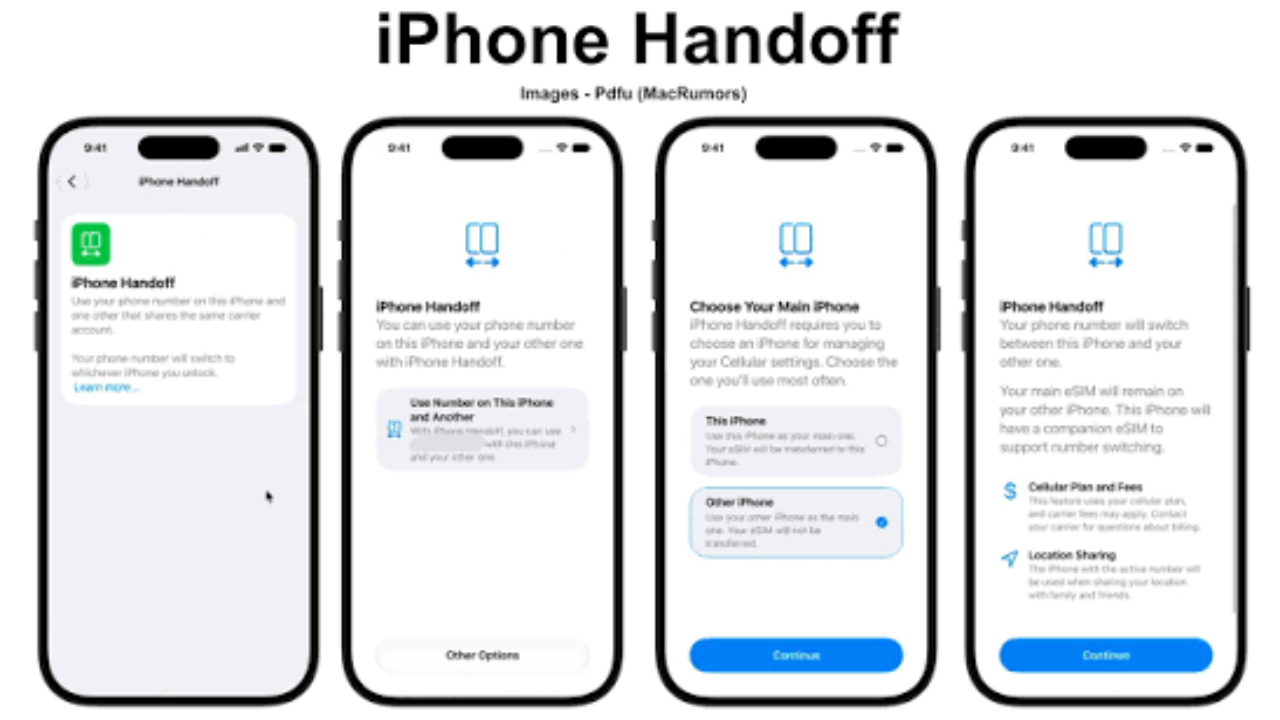
Apple is preparing a new iPhone Handoff feature for iOS 27 that could make using two iPhones with one phone number much easier. Instead of moving an eSIM from one phone to another, users will be able to set up one iPhone as the main device and another as a companion device.
The feature is especially interesting for people who keep two iPhones for different situations, such as using one as a daily phone and another as a larger or more specialized device.
What is Apple’s new iPhone Handoff feature?
The new iPhone Handoff feature is part of iOS 27. Apple briefly showed the feature during its 2026 developer event, but did not initially explain how it would work in detail. More information has now appeared in testing and demonstrations of the upcoming software.
The main idea is simple: one phone number can be connected to two iPhones, with one phone treated as the main device and the other as a companion.
The main iPhone keeps the primary eSIM. The second iPhone receives a companion eSIM connected to the same phone number. This means users can move their number from one iPhone to the other without manually transferring the main eSIM each time.
This is different from Apple’s older eSIM transfer system. Normally, when a phone number is transferred to a new iPhone, the number stops working on the previous iPhone. Apple’s current support information says that an eSIM transfer moves the number to the new phone rather than keeping it active on the old one.
How one number can work across two iPhones
The new system is designed around a primary and companion iPhone. The primary phone remains the main place where the cellular account is managed, while the companion phone is linked to it through the new Handoff system.

The important difference is that users are not simply putting the same physical SIM into two phones. Instead, the second iPhone gets a companion eSIM that is tied to the same number.
Apple’s approach can be understood like this:
- The primary iPhone keeps the original eSIM and remains the main cellular device.
- The second iPhone is set up as the companion device with a companion eSIM.
- Users can switch the active phone number between the two iPhones.
- Cellular settings remain controlled from the primary iPhone.
The feature therefore appears designed for switching between two personal iPhones rather than making two phones permanently operate as completely independent cellular devices.
Why this could be useful for iPhone owners
For years, people who wanted to use two iPhones with the same number had to rely on workarounds. Apple’s existing Continuity features can let an iPad or Mac make and receive calls through an iPhone, but that is different from giving another iPhone access to the same mobile number.
The new feature could be useful when someone owns two iPhones and wants to change devices without changing their phone number or repeatedly moving an eSIM.
For example, a person could keep a smaller iPhone for everyday use and switch to another iPhone when they need a larger screen or different hardware. The number would stay with the user’s setup rather than being permanently tied to only one handset.
It could also make switching between two iPhones less frustrating because the user would not have to repeatedly go through the normal eSIM transfer process.

Carrier support will be the biggest limitation
There is an important catch. iPhone Handoff is not expected to work simply because an iPhone has iOS 27.
The mobile carrier also needs to support the feature. This is important because the system depends on a carrier-supported companion eSIM arrangement.
Reports based on Apple’s software testing have pointed to T-Mobile in the United States and Deutsche Telekom in Germany as possible early supporters. That does not mean the feature will automatically be available to every customer of those carriers, and it does not confirm support from carriers in other countries.
For users in India and other markets, availability will therefore depend heavily on local carrier support. Apple has not established that every carrier will offer the feature when iOS 27 launches.
iPhone Handoff is not the same as normal Apple Handoff
The name could cause some confusion because Apple already has a feature called Handoff.
Apple’s existing Handoff lets users start something on one Apple device and continue it on another. For example, a webpage or document can be continued on a nearby Mac, iPad or iPhone when the devices are signed in to the same Apple Account and meet the required settings.
The new iPhone Handoff is different. Its main purpose is to manage one mobile phone number across two iPhones.

| Feature | Existing Apple Handoff | New iPhone Handoff |
|---|---|---|
| Main purpose | Continue tasks between Apple devices | Switch one phone number between two iPhones |
| Devices | iPhone, iPad, Mac and other supported Apple devices | Two iPhones |
| Mobile number | Not designed to move a cellular number between two iPhones | Designed around one number and two iPhones |
| Main requirement | Compatible devices, Apple Account, Wi-Fi and Bluetooth | iOS 27 plus supported carrier service |
| SIM/eSIM role | Not the main part of the feature | Uses a primary eSIM and companion eSIM |
This distinction matters because the older Handoff feature does not mean that two iPhones can simply share one cellular number. Apple’s current documentation treats cellular service and normal Handoff as separate features.
What happens when you switch phones?
The new system is meant to make switching between the two iPhones much easier. Instead of removing an eSIM from one phone and setting it up again on another, the user can select which iPhone should use the number.
The companion phone remains connected to the same overall phone-number setup, while the active cellular use can be moved between the devices.
Apple also ties some information to the iPhone that is currently using the number. Reports about the feature indicate that location sharing can follow the iPhone that is actively using the phone number.
That could be useful for people who regularly change which iPhone they carry, because their active device can change without requiring a complete cellular setup each time.
What iPhone users should know before getting excited
The feature could be a major convenience, but it is not yet a universal replacement for having two separate mobile lines.
There are several things users need to keep in mind:

- Both iPhones need to support the required iOS 27 setup.
- The mobile carrier must support Apple’s companion eSIM system.
- Carrier availability can differ from one country or network to another.
- The feature is designed for switching one number between two iPhones, not for creating two separate numbers.
This also means users should not assume that buying two compatible iPhones will automatically make the feature work. The carrier is an important part of the system.
A useful change for people who own two iPhones
The biggest advantage of iPhone Handoff is convenience. Apple’s normal eSIM transfer process is useful when moving a number permanently from an old phone to a new one, but it is not designed for people who regularly alternate between two iPhones.
The new feature takes a different approach. Instead of treating the second iPhone as a replacement, it treats it as a companion device.
That could make a lot of sense for users who have different reasons for carrying different phones. Someone might want one phone for everyday use and another for travel, work or situations where a different size or design is more useful.
What happens next
iPhone Handoff is tied to iOS 27, which Apple is expected to release later in 2026. The feature has already moved beyond the brief announcement shown earlier in the year, with details of the setup becoming clearer through software testing.
However, carrier support remains the key question. Until individual networks confirm support, iPhone owners cannot assume that the feature will be available on their existing mobile plan.
For now, the important point is that Apple is changing the idea of what it means to have one phone number on two iPhones. Rather than repeatedly transferring an eSIM, iOS 27 is designed to let a primary iPhone and a companion iPhone share the same number setup and switch between them.

Final takeaway
Apple’s new iPhone Handoff could make two-iPhone ownership much easier. The feature is designed to let one phone number move between two iPhones through a primary eSIM and a companion eSIM, reducing the need for repeated manual transfers.
The idea is straightforward, but carrier support will decide how widely people can actually use it. If major carriers support the system, iPhone users who regularly switch between two devices could gain a much simpler way to stay connected without changing their number each time.