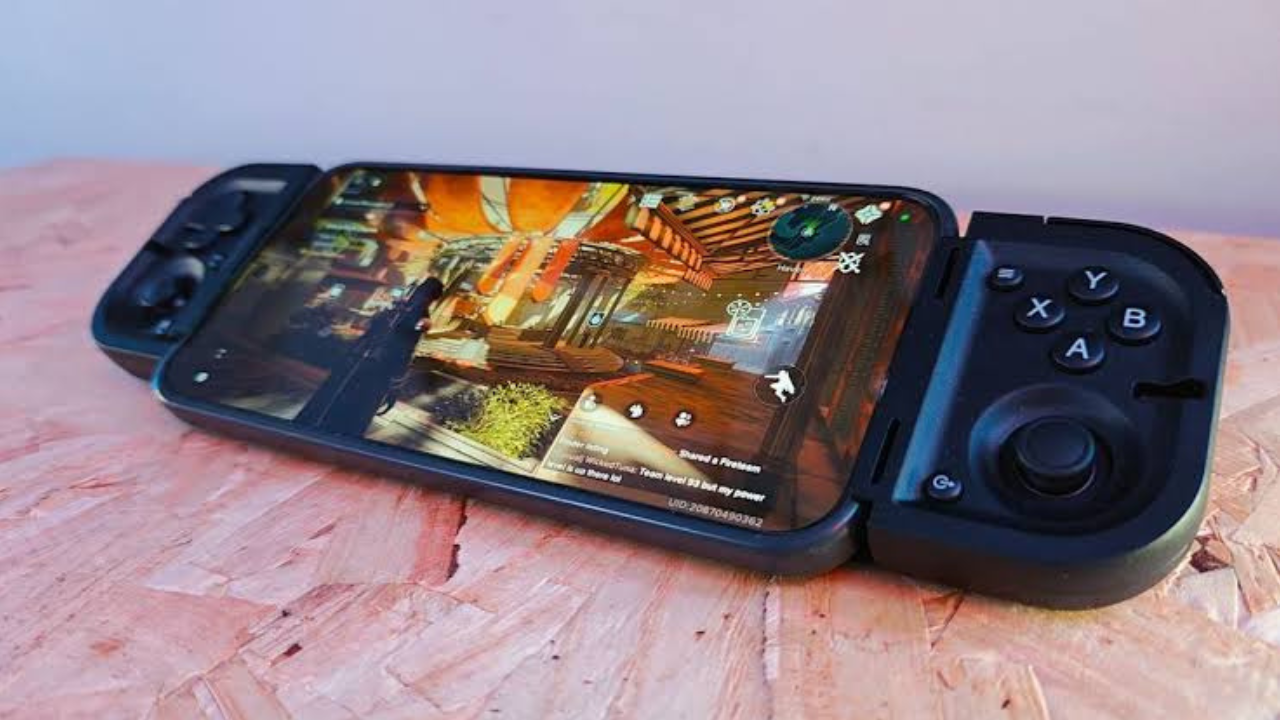
The Razer Prio is a new kind of mobile gaming controller built around one simple idea: make a proper game controller small enough to carry anywhere. It folds down to roughly credit-card size, weighs just 101 grams, and connects directly to a phone through USB-C.
At $99.99, however, it is not a cheap accessory. The big question is whether its unusual design and strong controls make it worth paying more than some competing mobile controllers.
Razer Prio: What makes it different?
The biggest selling point of the Razer Prio is its folding design. Instead of staying attached to a phone-shaped frame, the controller folds into a much smaller package when it is not being used.
When folded, it measures 107 x 67 x 23 mm. Razer says it is about the size of a credit card, although it is much thicker. At 101 grams, it is also light enough to carry in a pocket or small bag without adding much weight.
Opening the controller reveals a full gamepad layout with two thumbsticks, a four-way D-pad, face buttons, bumpers and analog triggers. The design is aimed at people who want proper physical controls without carrying a large control .

| Feature | Razer Prio |
|---|---|
| Type | Foldable mobile gaming controller |
| Weight | 101 grams |
| Folded size | 107 x 67 x 23 mm |
| Connection | USB-C |
| Phone size support | Up to 7 inches |
| Supported phones | iPhone and Android |
| iPhone requirement | iOS 18 or later |
| Android requirement | Android 14 or later |
| Battery | No separate controller battery |
| Launch price | $99.99 |
How good are the controls?
The controls are one of the strongest parts of the Prio. Razer has used capacitive thumbsticks instead of traditional physical contact-based sensors. The company says this design is intended to reduce the chance of stick drift.
Early hands-on testing has also been positive. Reviewers found the small controller surprisingly precise, including when playing shooters and racing games. The face buttons are tactile but designed to be quiet, while the controller includes proper analog triggers rather than relying only on simple digital buttons.
That is important because a very small controller can easily feel like a compromise. The Prio tries to avoid that problem by keeping the basic control layout close to what players expect from a traditional gamepad.
Portability is the real reason to buy it
The Prio makes the most sense for people who regularly play games away from home. Its folding body protects the controls while the controller is in a pocket or bag, and its small size makes it much easier to carry than many full-size mobile controllers.
It can hold phones up to 7 inches, and Razer says the design works with many slim and medium phone cases. The controller uses adjustable parts to accommodate different phone sizes.

The portability benefits are especially clear for commuters and travelers. You can leave the controller folded until you actually want to play, rather than carrying a large accessory all day.
USB-C connection keeps things simple
The Prio connects directly to the phone using USB-C. There is no Bluetooth pairing process and no separate controller battery that needs to be charged.
That also helps keep input delay low. A wired connection is useful for games where quick reactions matter, including shooters and racing games.
The controller can be used for native mobile games as well as supported streaming services and remote-play systems. Razer lists Xbox Cloud Gaming, Steam Link, PS Remote Play and Razer PC Remote Play among the supported options.
There is one important downside: the Prio does not offer pass-through charging. That means you cannot simply plug a charger into the controller while it is connected to the phone and charge the phone through it.

Where the Prio falls short
The compact design comes with some limits. While the controller is small and easy to carry, people with larger hands may prefer a bigger controller for long gaming sessions.
Phone compatibility also needs attention before buying. The Prio supports phones up to 7 inches, but certain devices with large camera sections or foldable designs may not fit correct.
The main drawbacks are:
- No pass-through charging while the controller is connected
- Some large-camera and foldable phones may not fit
- Small physical size may not suit players with large hands
- $99.99 puts it above many simpler mobile controllers
Is $99.99 a fair price?
The Razer Prio costs $99.99, which places it in a competitive part of the mobile-controller market. At that price, buyers are paying mainly for portability rather than a long list of extra buttons or advanced features.
There are less expensive controllers that offer larger grips and more features. On the other hand, many of those products cannot fold down nearly as small as the Prio.

This makes the value question depend heavily on how you plan to use it. If you mostly play at home, a larger controller may give you better comfort for the same money. If you travel often and want something that can disappear into a pocket, the Prio’s design becomes much more appealing.
Razer Prio vs a regular mobile controller
A traditional mobile controller usually stays in a long, extended shape even when it is not connected to a phone. That can make it more comfortable to hold, but it also takes up more space.
The Prio takes the opposite approach. It sacrifices some of that bulk to make carrying the controller easier.
| Razer Prio | Traditional mobile controller |
|---|---|
| Folds into a very small package | Usually remains full size |
| 101 grams | Often heavier |
| USB-C connection | USB-C or wireless, depending on model |
| No controller battery required | Some models have batteries |
| Excellent for travel | Often better for long sessions |
| Full basic controller layout | May offer extra buttons and features |
| $99.99 launch price | Wide range of prices |
The Prio is therefore not trying to replace every mobile controller. It is designed for a specific group of players who value portability above almost everything else.
Is the Razer Prio worth buying?
Yes, but mainly for the right type of gamer.

The Prio is a strong choice if you want a mobile controller that you can carry almost anywhere. Its 101-gram weight, folding body, direct USB-C connection and full control layout make it unusually practical for travel. Early reviews have also found the controls more capable than the small size might suggest.
It is less convincing if you mainly play for several hours at a time at home. In that situation, a larger controller with bigger grips may be more comfortable. The lack of pass-through charging is another limitation worth considering.
Overall, the Razer Prio is an interesting product because it solves a real problem rather than simply adding another standard phone controller to the market. Its biggest strength is not one particular button or feature. It is the fact that a proper controller can fold down small enough to carry almost like a wallet.
At $99.99, it is not the obvious choice for everyone. But for frequent travelers, commuters and mobile gamers who care deeply about portability, the Razer Prio looks like one of the more interesting new controller options of 2026.