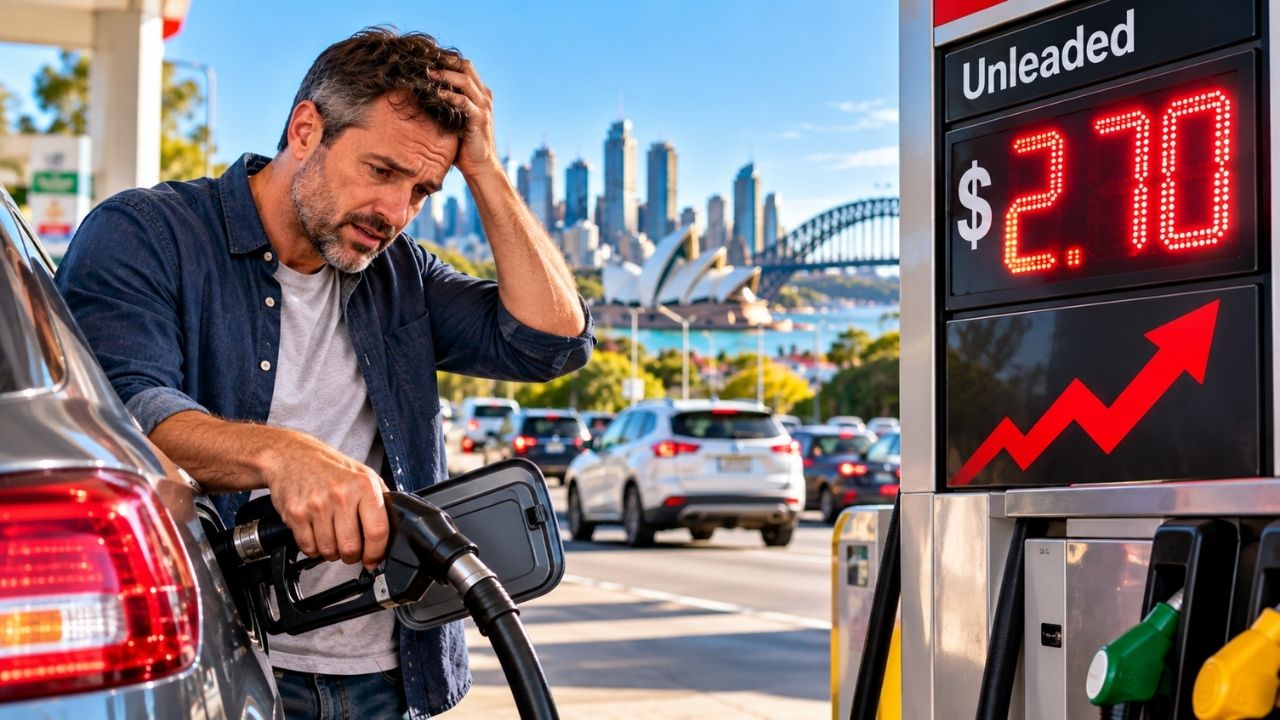
Australian motorists are facing fresh pressure at the bowser. Global oil prices have climbed again, and some forecasts now suggest regular unleaded could push past $2.70 a litre if the current surge continues.
Why prices are rising now
Petrol prices in Australia closely follow international crude oil and refined fuel markets. When oil costs more, the increase usually reaches local service stations within one to two weeks.

Recent jumps in the global oil price have been driven by ongoing supply concerns in the Middle East. Disruptions around key shipping routes and energy infrastructure have kept crude benchmarks elevated. Australia imports most of its petrol and diesel, so local prices move in step with these international movements.
Where prices stand today
National averages for regular unleaded have already moved well above earlier levels this year. In many cities, prices are sitting in the $2.30 to $2.40 range, with some stations higher. Diesel has risen even more sharply in recent months.
These levels remain below previous peaks seen earlier in 2026, but the direction of travel has motorists and industry groups watching closely.
What a move past $2.70 would mean
If oil continues to climb or supply stays tight, petrol could test or pass the $2.70 mark. That would add noticeable cost to everyday driving.
For a typical 50-litre tank, the difference between current prices and $2.70 would mean an extra $15 to $20 per fill-up. Families and businesses that rely on vehicles would feel the impact most.
How motorists can respond
There are practical steps that can reduce the hit:
- Check fuel price apps or websites to find the cheapest stations nearby
- Fill up mid-week when prices are often lower in many cities
- Combine trips to cut overall fuel use
- Keep tyres properly inflated and remove unnecessary weight from the car
Even small changes in driving habits can make a difference when prices are high.
The wider picture
Higher fuel costs feed into the broader cost of living. They affect transport, delivery prices and inflation. While global oil markets can ease as quickly as they rise, the current environment shows how sensitive Australian pump prices remain to overseas events.
For now, the latest oil surge means motorists should prepare for the possibility of further increases in the weeks ahead.