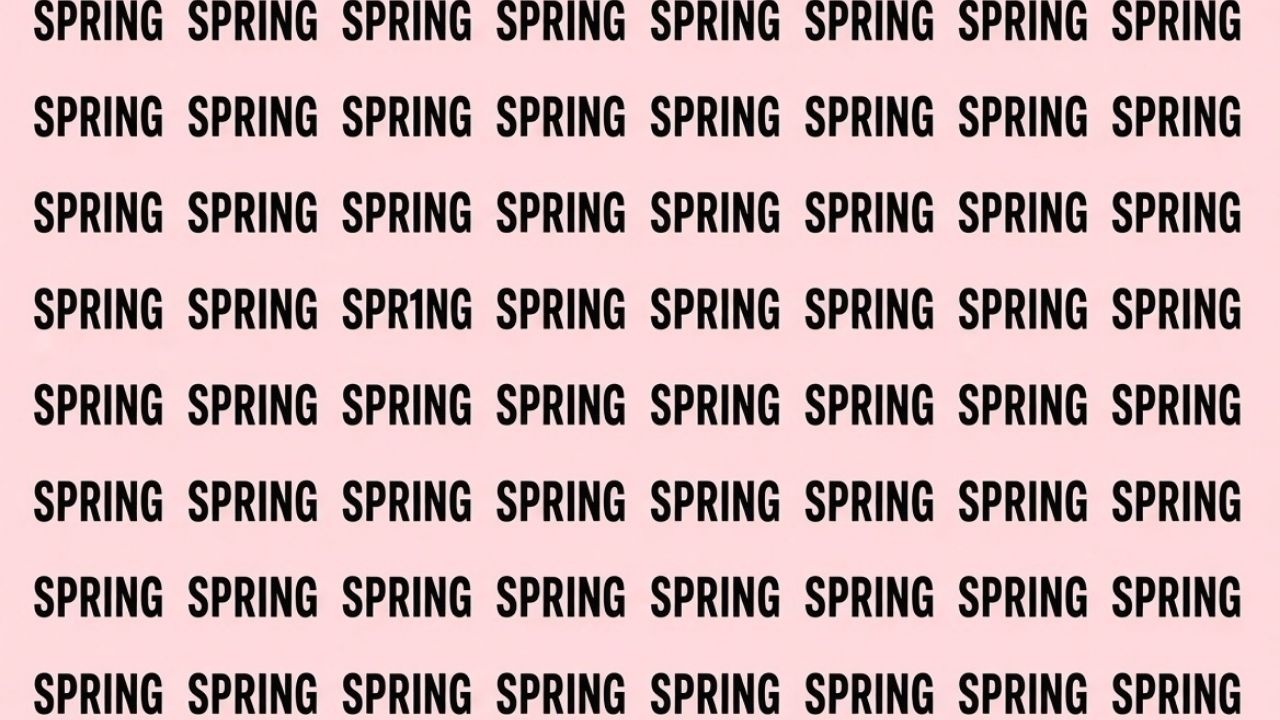
Visual brain teasers and spot-the-difference games are surging in popularity across digital spaces as people look for quick ways to test their mental focus. The latest internet challenge features a vibrant, cozy spring illustration filled with blooming flowers, chirping birds, and lush green plants. Somewhere hidden inside this seasonal masterpiece is a single rogue fragment or out-of-place item that absolutely does not match the rest of the picture.
Why online spot-the-difference puzzles are booming
These quick visual games are no longer just for children; millions of adults now use them daily as quick cognitive exercises during work breaks. Psychologists note that scanning a busy image for a tiny mismatch forces the brain to activate its visual attention networks, improving short-term focus and pattern recognition. The pleasure of finally catching the hidden item triggers a tiny burst of satisfaction, making it an addictive way to unwind.

To see how different puzzle variations stack up in terms of difficulty and target skills, consider the common visual challenge formats below:
| Type of Visual Riddle | Primary Brain Skill Tested | Average Time to Solve |
|---|---|---|
| Out-of-Place Fragment | Sharp object recognition and edge matching | 10 to 15 seconds |
| Spot the Difference | Working memory and side-by-side comparison | 30 to 45 seconds |
| Hidden Word Tracing | Linear scanning and reading focus | 20 to 30 seconds |
Most casual players can spot a basic color or shape error within a few seconds, but the hardest puzzles hide the odd detail in plain sight by mimicking the surrounding textures perfectly.
How to systematically scan a visual puzzle
When you are looking at a complex spring scene filled with overlapping shapes, your eyes naturally jump around randomly, which actually makes you miss the hidden error. To beat the clock and find the hidden detail before your friends do, you need to use a structured search strategy instead of just guessing.
- Divide the picture mentally into four equal quadrants and inspect one section at a time.
- Trace your eyes along the borders of individual objects, checking for strange outlines.
- Look closely at the repeating patterns, such as flower petals or leaf veins, to spot a break in the rhythm.
- Cover the main image with your hand for three seconds, then look back to let the mismatch jump out.
Using these systematic scanning steps prevents eye fatigue and allows your brain to process fine visual data much faster, drastically reducing your search time.
The common tricks puzzle designers use
Graphic artists use highly specialized tricks to keep you searching for as long as possible. One classic method is color deception, where the rogue object is given a shade that is just slightly different from the background, making it blend in under normal lighting. Another trick involves scale manipulation, where a standard object is shrunk down or blown up just enough to look normal at first glance but entirely wrong upon closer inspection.
In many spring-themed challenges, designers love to hide winter or autumn elements—like a dead leaf mixed into fresh spring blossoms or a tiny snowflake pattern printed on a flower petal. Training yourself to look for thematic contradictions rather than just physical shape errors is the secret weapon of master puzzle solvers.